

“Is someone dead?” (Chapter 10, Five-Eighty: A Novel)

Five-Eighty is a novel about a private detective working in the suburbs of the Bay Area of California in the early 1970s. Each Saturday morning a new installment appears. As the events of this novel take place during the election season of 1974, the story will be released during this, the election season of 2024. May it prove an entertaining distraction from the news of the day. Please enjoy, and as always, comments are welcome!

—HF


Chapter 10

The next day is as gloomy as the last, a dank and sometimes drizzly day so that the cars that pass on Arlington up above the house make little spraying noises as they pass. Laura is already gone to work, her convertible top fixed in place on the Benz. I take the Volvo down to the Lucky’s on San Pablo to get miniature candy bars for Halloween. I really should have done this sooner, the selection is kind of picked over, it being the day before. There’s some Mars Bars, and candy corn, and that’s about it. Neither of us had time to make candy apples, though, and besides, we live in a world authored by Charlie Manson and the Symbionese Liberation Army. Nobody trusts home-made candy anymore.
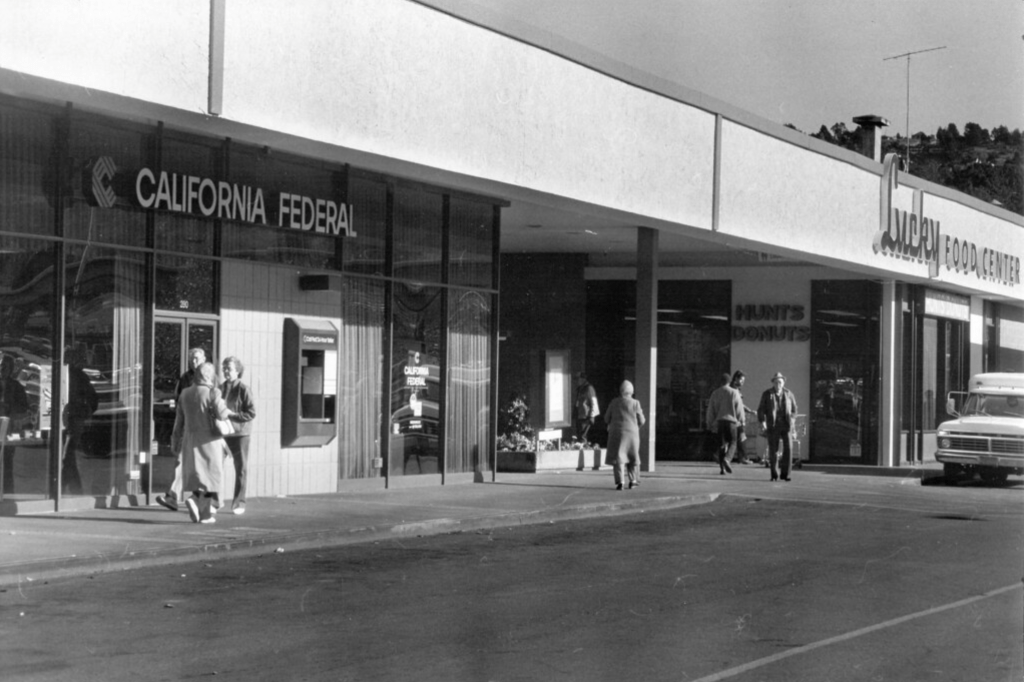
Lucky’s at the El Cerrito Plaza shopping center, c. 1973.

            Back at the house, I cart four paper bags worth of candy into the house, and as I set it down on the linoleum kitchen countertop, the phone rings. I pick it up, and it’s a lieutenant in the Oakland Police, wanting to come up to talk. I agree, and inside of an hour, I see through the front windows an unmarked pea-green Ford pulls up in front of the house and stops. The occupants are slow to get out, and slow to approach the house. One—the driver—is a tall black man with a short, tight head of hair and robust sideburns, wearing a coffee-colored plaid three-piece suit, the hem of its jacket bulging around where he keeps his sidearm. The passenger is a uniform, a white gym-rat type with a uniform that barely accommodated his overdeveloped body. They both let their eyes pass over everything on the way to the door, as if tourists, and as they draw closer, I see that the black man is younger, probably ten years below me, while the uniform is about my age, though his fine fair hair is beginning to gray at the temples.

            I open the door for them.

            “Mister Chisholm? Lieutenant-Detective DuPont, Oakland Pee-dee Homicide Division. This is Sergeant Folger, he works a West Oakland beat. May we come in?”

            I wave them in. They step through, and again their heads swivel about them, as they stand in the foyer between the door and the glass partition.

            “Is someone dead?” I ask.

            “Hrm?” DuPont’s eyes come back to me. “No, no. Is there someplace we can sit and talk?”

            I take them through the living room to the dining set that Laura had set up on the other side of the partition. DuPont picks a chair facing inward, and Folger sits on the same side, to his left, but cocked in his chair so he can turn his head to the left and look out at the view, if he wants. His eyebrows raise and he catches my glance. “Nice place you got here.”

            “Thanks.” I sit in one of the chairs on the other side of the table, facing the two of them and the view of the bay. “Now how can I help you?”

            DuPont starts. “Do you know a Helen Ritz?”

            “Can’t say that I do.”

            “Of… wait, where is it again, Sergeant?”

            Folger reads off an address on Union Street.

            “I’m not sure.”

            DuPont shifts in his chair. “What do you mean, you’re not sure?”

            “Can you describe her?”

            Folger starts in, almost clinically, almost tired, reading off a small notepad he’s taken from a shirt pocket. “Five-foot-ten, brown skin, hair a mixture of gray and black…”

            “A middle-aged black woman,” DuPont interjects. “Rather pretty for her age. Proud. Strong. Maybe not strong enough. Has a son named Isaiah, works as a bus mechanic for A.C. Transit.”

            “Yes, I’ve met her once, and her son.”

            “In connection with your job as a private investigator?”

            “Yes, but I wasn’t investigating them.”

            “When did you talk to them, and why?”

            “Yesterday morning. I was trying to find the owner of a property, and the last registered address was on Union Street. I went to go see the owner, but they weren’t home, so I thought I’d talk to one of the neighbors and see if they knew anything. From your description I think Helen is the neighbor I talked to. Can you tell me what this is about? You said you’re from homicide, but also that nobody is dead.”

            “Yesterday afternoon,” replies DuPont, “Missus Ritz went out for a walk, to go the corner store for her favorite vice, a pint of Dreyer’s. On the way home, she was stopped by two men. A witness says they talked to her, but they must not have liked what she said. They hit her. Missus Ritz must be a proud woman, ‘cause she took it, and she stood taller, and so they hit her again, only it went a little further than they probably had intended. She fell to the ground, hit her head, started bleeding on the sidewalk, passed out. The two men panicked, ran off. A dark red or maroon Lincoln was seen driving off at a fast clip not long after.”

            “I’m sorry to hear that, will she be alright?”

            “She’s at Kaiser. Doc says she’ll recover, but she’s got a concussion, and she’ll need time.”

            “How did that all bring you to me?”

            Folger: “We got called in. While she was unconscious, and we were waiting for the ambulance, we went through her purse looking for identification. We found your business card.” Folger pulled the card out from his notebook and slid it onto the table.

            I nodded. “I gave both her and her son a card yesterday.”

            “What for?” Asks DuPont.

            “In case either of them remembered anything about their neighbors.”

            “Why give them both cards?”

            “I don’t think Isaiah liked me. I figured he might throw his away.”

            “But Missus Ritz liked you?”

            I shrugged. “A card is cheap, an opportunity isn’t.”

            “Tell me more about your business, Mister Chisholm. As the sergeant said,” DuPont looks around the room with his head, making a show of it, then pursing his lips a little. “You have a nice place. How can you afford this on an investigator’s salary?”

            “My wife’s family is in real estate, and the house was a wedding gift from my father-in-law.”

            DuPont’s eyebrows go up. “Nice gift. Nice father-in-law. So you come from money, own real estate?”

            “No. Laura—my wife—is an estate agent. We own this, and we own a small office out in Santa Rita.”

            “Still, not bad. But you aren’t an agent yourself?”

            “No.”

            “And you never finished your law degree.” DuPont’s eyes are cold, unmoving, locked on mine the way a big cat locks eyes on its prey.

            I grin at him. “No. And I didn’t tell you I went to law school. So why don’t you tell me why you are really here?”

            “I’m not sure what you mean.”

            “You’ve done background research on me. It hasn’t even been twenty-four hours since Missus Ritz got put in the hospital. I think you’ve got ideas. Let’s hear them.”

            DuPont shakes his head. “I’m just being thorough.”

            “A black woman got beat up, maybe mugged, in West Oakland. And someone from the homicide division has taken the time to research me, then come up here with the beat cop who was on the scene, just to chat, just to be thorough. I don’t know much about criminal activity, at least not this wheelhouse of it, but none of that adds up.”

            Folger: “And just what wheelhouse of criminal activity do you know about?”

            “Theft. Fraud. Mostly theft. I specialize in property related disputes.”

            Folger: “So what, you’re a repo man?”

            “Yeah, sometimes.”

            “Out collecting hammers and saws that didn’t get turned in by the Okies and Arkies some builder hired for the day?”

            I crack a smile. “Yeah. Sometimes, if there’s enough hammers and saws missing. It can add up. But it’s also a bit missing persons, tracing down owners of trusts, defunct properties, finding people who owe on mechanic’s liens. That sort of thing.”

            Folger is about to open his flap again, but I see DuPont hold up a hand at him, low near the table top. Then he takes a turn. “Mister Chisholm, forgive this question, but why?” I just cock an eyebrow, and he continues. “I mean, why do that kind of work? You have a nice house, apparently it’s all paid for. Your wife has a good job that brings in enough money to keep the place running. You may not have a law degree, but you’re pretty well educated. Most investigators are washed-out versions of us, people who couldn’t hack it in the force, or guys who retired then either couldn’t leave the game behind or wanted to make an extra buck.”

            I just shrug as a response.

            “Let’s move on. What was this property you were looking into yesterday?”

            “A house up off Tunnel Road.”

            “You got an address for it?”

            I weigh this. On one hand, I could try and hold it back, but they already know that the property I’m looking at belongs to someone with an address next to the Ritz family, so the odds were high they could figure it out with enough legwork. I give up the address.

            “And why did you want to find the owners of this property?”

            “A client is interested in it, might want to buy it. It’s small, a modernist wood house, probably 1940s. Might be a Wurster, or maybe a Bernardi.”

            “Wurster? Bernardi?”

            “Architects. Specialized in a kind of relaxed blend of Modernist simplicity and California-inspired vernacular construction.”

            I see Folger, who is taking notes in his small pad, frantically cross out something.

            “And who were these owners?”

            “It was a corporate owner, a company called Paris Holdings. According the to the Secretary of State’s office, the company has three directors, Frank Lions, Charles Maine, Louis Solaris.” Folger scribbled away. “All three listed that Union Street address as their home. Nobody was answering the door, though.”

            “So you went next door to the neighbors.”

            I nod. “And they hadn’t heard of any of them.”

            “Well.” DuPont leans back in his chair, which I’d rather he wouldn’t do, since they must be antiques by now. “Seems like a dead end for you.”

            “Until I went to the neighbor’s, yes.”

            DuPont sits forward. “What did they tell you?”

            “They’d never heard of any of those people. The son—Isaiah—told me that the house on Union belonged to some drug dealer or other. I’d never heard of him. Someone named French.”

            Folger set his pencil down. DuPont, whose fingers were rapping the table off and on, froze.

            DuPont: “Lenny French?”

            “That’s the name.”

            “Listen. You’ve gotten in over your head. Your client, whoever he is? Tell him to forget about that place in the hills. Find another property. Lenny French is a mean sonofabitch. It’s probably his guys who roughed up Missus Ritz. Be careful he doesn’t come after you next.”

            “Why would he?”

            “Same reason he came after Missus Ritz, I expect. To satisfy his curiosity. Besides, cruelty is a muscle. You’ve got to exercise it to keep it in shape.” DuPont looks at Folger. “You got anything else?”

            “Nope.” Folger folds the notebook up and sticks it and his pencil into his shirt pocket. “I’m good.”

            I walk them to the door, then out to the car. Dupont is about to get in when he pauses. “Hey, sarge.” Folger, who was getting into the car, steps back out behind the passenger side door. “Didn’t you say there was a maroon Lincoln that fled the scene of Missues Ritz’s altercation?”

            “Yeah.”

            DuPont nods forward with his chin. “Go check it out.”

            Looking up the road, on the left-hand side, there’s a Pontiac in baby blue, a little gold Honda, a gray Buick from twenty years ago, and behind it, facing the other way, a Continental in a color that might be red, or might be purple, or might be brown. Folger lets his door slide shut and starts walking up the sidewalk on the downhill side, approaching nice and slow. About halfway to his target, the tail lights on the Lincoln spring to life, and then the car pulls out into the lane and drives away. Folger gives an exaggerated “why me” shrug, then turns and starts walking back.

            “Hey Lieutenant,” I say from across the top of the unmarked. DuPont looks across the roof at me. “You never said why a homicide cop would get stuck with this detail.”

            “Mayor Reading is thinking about the next election. Having a couple white guys beat up a respectable old black lady? There’s no telling where that shit could end. He may have beat Bobby Seale last year, but losing 40% of the vote to a Black Panther isn’t exactly a comfortable place to be. Next time, it could be a brother who has appeal for the white vote, too, and then where is he?”

            “But homicide?”

            “No black folk in the red squad, and who else is he gonna send? Vice?”

            Folger arrives back at the car.

            “You get the plate?” DuPont asks.

            “No, forgot my pencil in the house, and memory ain’t what it once was. Anyway hold on—” Folger turns to me. “Any chance I can get back in for my pencil?”

            I lead him back to the house and open the door. He pushes past me fast, and by the time I get to the dining room table he’s already slipping his pencil in his shirt pocket. “Sorry about that. So hey, how’s your brother doing?”

            “You know Nick?”

            “Oh, yeah, we go way back.”

            “He’s fine, just saw him yesterday.”

            “Yesterday, huh? Well, what’s he doing for a living now, anyway?”

            I shrug. “How do you know him?”

            “Oh, we go way back.”

            “You said that.”

            “Yeah, I did.” We go back to the front door. In the door-jamb, Folger stops. “What the el-tee said, about leaving Lenny French alone? It’s good advice. And next time you see Nick, why don’t you tell him I said hello, huh?”

            “Yeah, sure.”

            “That’s good.” Folger began to move down the path to where the unmarked sits, running now, with DuPont behind the wheel smoking a cigarette and looking bored.

            I raise a hand slightly. “Hey, sergeant.”

            Folger pauses and looks back.

            “You put the pencil in your pocket the first time you left. You had it on you when you walked down towards that Lincoln, and you know it.”

            “Did I? I think you’re imagining things.”

            Folger gets in the Ford, and the two of them leave.


More each Saturday!

Enjoy this installment of Five-Eighty? Watch for future installments every Saturday morning during Fall, 2024. The next intallment will post on Saturday, October 7th, 2024. Previous chapters can be viewed here.

A note about sharing. While this novel is released to the public free of charge, I reserve all rights to publication. You may send links to friends, post excerpts on social media, or share it in any reasonable way, but please do not repost whole chapters, nor print and distribute paper copies. Please also, whenever possible, share a link back to the content.

“Calafia,” (Chapter 9, Five-Eighty: A Novel)

Five-Eighty is a novel about a private detective working in the suburbs of the Bay Area of California in the early 1970s. Each Saturday morning a new installment appears. As the events of this novel take place during the election season of 1974, the story will be released during this, the election season of 2024. May it prove an entertaining distraction from the news of the day. Please enjoy, and as always, comments are welcome!

—HF


Chapter 9

It is wet and dark and rainy. The pavement on California Street glistens, and I worry that my shoes won’t have enough traction to get to the Mark safely. Still, we make it, striding through the front doors a bit soggy but intact, the doorman not even blinking at us in our tuxedos. Inside, the lobby is all pastel and vaguely French and silly, and beyond are three doors leading into a winter garden room, and several tall men in suits standing guard. We approach one at the middle door, and Nick pulls a folded card from somewhere and hands it to him.

            “You’re a bit late,” the man replies. He has the build and creases and odd square stance of a cop, moonlighting. “Music’s basically done.”

            “Nobody arrives at these things on time.”

            The moonlighter jerks his head back over his left shoulder. “Plenty of nobodies in there, then. Who’s he?” His finger points at me.

            “My guest.”

            Mr. Moonlighter looks us both up and down like a dog at a butcher shop window. “Really.”

            “Hey,” replies Nick. “It’s 1974. It’s legal now.”

            Mr. Moonlighter shrugs. He waves us through into the winter garden. Inside, at the back, there are tables set up with white linen and white-jacketed attendants behind them. A bar. I order a rum and coke. Nick orders something called a Harvey Wallbanger.

            “Harvey who?” I ask.

            “Galliano, vodka, lime.”

            “Oooooo-kay then.”

            To our right, through the rather small door, piano music drifts out, the notes bouncing up and down and somersaulting, surrounded by an audible hiss of restrained conversation.

            “How did you get tickets to this thing, anyway?”

            “Did I mention how I know a guy?”

            We make for the door, and the piano music repeats a few phrases, slower, gentler, and the hiss of conversation comes down a notch, and then silence. Suddenly there is clapping, and a muffled announcement, and then the talking grows much louder, and we walk in. The room is filled by suits and flowing evening gowns, cocktail dresses filled with tanned bodies, sideburns wearing men, ties that too wide and lapels big enough to hang a man. The lighting is dim, and all the people stand around the edges of the room in little clusters. There are arms swept, gestures and handshakes, nods and frowns and quiet cocks of the head. A surprising amount of Brill cream, collars loosened but not too far. I don’t really recognize anybody, but there’s hundreds of people here. In the center of the room is a grand piano, a spotlight from somewhere trained on it, but as soon noticed as doused, while a tall, gray-haired man stands, wipes his brow with a handkerchief, then turns to greet a few others with a shoulder pat and a smile. To the right are three openings into another room, the light in there a bit warmer, the people in there uncounted. As I scan the room more, I don’t see Santini, but then I’m not sure he would be here anyway. I do see Carpenter, his gray suit almost too bright for the occasion, his face showing the same impolite consternation as the last time we had talked, as if his group of companions are delivering news that doesn’t meet with his personal, high standards.

            “Look,” Nick says, nudging me in the side with an elbow. “There’s Joe Alioto.”

            “Sure is.” I ignore the prompt, and notice instead a woman holding onto David Carpenter’s arm. She is a few inches shorter than him, not striking or even remarkable in any easily defined way, but somehow more alive than him. As the little group they stood in converses, David responds through scowls or words that looks spat out like bullets more than communiques. The woman’s face, however, betrays no inner emotions except perhaps calmness, a reticence to be forced into discussion, yet not a fear of it either, for from time to time she adds something in that causes David to pause, allow the others to react suitably, then charge back on his tear again, a car occasionally held up at a railroad crossing. For a moment, she glances my way, and I feel like she is looking directly at me. Then her eyes go back to the other guests, all of whom are hanging on some harangue David is on about.

            “And there’s Dad.”

            “What?” I turn to Nick, and he nods to the left a bit, and I follow his nod. There’s my father, his head just above another crowd, talking and gesticulating and people around him smiling and laughing and paying tribute. “I don’t see Mom. Is she here, too?”

            I turn back around. I can’t find Nick. Damn him. I head right, skirting the wall, then duck through one of the doors into the other room. Several low couches are strewn about the perimeter of the slightly smaller room, most empty, though some of the guests are starting to flow in along with me to find a place to rest their feet and sip their drinks. The room is nearly golden, all painted wood paneling, while up above is a painted pantheon of figures, Indian folklore meets classics lessons, Pallas Athene meets Pocahontas, that sort of thing. I get lost in them for a moment, then hear someone beg my pardon to my left. I turn, and the woman who had been on David Carpenter’s arm stands before me, 5’9” in a gray-blue sheath and a gray-blue drape over her right shoulder. In her left hand is a flute of champagne.

            “I see you are admiring Calafia.”

            “Calafia?”

            She raises an arm from under the drape and points up over our heads, to the mural in the space above the central door. “Calafia, queen of the Amazons, queen of the Island of California, namesake of our state. Do you know the story?”

Maynard Dixon and Frank Sloan, Image of Calafia, from murals for the “Room of the Dons,” Mark Hopkins Hotel, SF, 1926.

            “I’m afraid I don’t.”

            She holds her hand out towards me, and I take it. “I’m Iris Woods Carpenter. You are?”

            “Kenneth Chisholm.”

            “Have we met? The name seems familiar to me.”

            “No, I don’t believe we have.”

            “Well it is a pleasure. Would you like to know the story?”

            “Sure. I mean, certainly.”

            Iris turns to stand beside me, to my right, leaning almost conspiratorially close. “Queen Calafia was a pagan or a Moor—the stories mix the two up sometimes, but they were written by an Iberian Catholic propagandist, so there’s little wonder. Regardless she engages in single combat against the princely son of a Christian king, and is defeated, but not killed or wounded, as God watches out for her. In prison, she is visited by God in the guise of one of the king’s young sons, and converted to the true faith. She ultimately marries the real prince, then returns with her husband and her now baptized Amazons to lead her golden island for the rest of her days.”

            “And she is who the state is named after?”

            “Yes. There was a 16th century novel about her, I cannot recall the author’s name. Many conquistadors carried it, including those who came to California. Cabrillo, Portola.”

            “So if she represents the state, who does the prince she fought stand in for? And who is the godly prince she marries?”

            “I don’t know. Perhaps the Southern Pacific, and Leland Stanford, Junior? I’m not sure what Maynard Dixon had in mind, but he was enough of a socialist that there’s probably a joke at the city’s expense buried somewhere in the brush-strokes.”

            “You know a great deal about state history and about art.”

            Iris lifts the champagne flute slightly. “Mills, and the things they think they should fill young girls’ heads with. Anyway,” she turns, “if you are not admiring the murals, then why are you in here?”

            “I’m hiding.”

            “From who?”

            “My father. I don’t want to talk about building materials and industrial parks all night.”

            “Well I can’t blame you for that. Unfortunately I can’t stay here and help you hide all night.” She holds out her hand again, and shakes mine. “It was a pleasure to meet you, Mister Chisholm.”

            Not even a second passes, and I see, through the doorway, that my father is looking directly at me from across the room. He raises a hand, beckons. I toss back the rest of my rum-and-coke, set it on a small table near the door, then walk through and make my way to his group on the far side of the piano.

            “Kenneth!” My father held out his hand for me to shake, as if I were another of his sales calls. It is clearly formality season.

            “Dad.”

            “Boys, I want you to meet my son, Kenneth. Kenneth, this is Tony Fergusson, Bob Petersen, and Fletcher Gill. Tony is with Bechtell, Bob and Fletcher are with Prudential’s property division.”

            Handshakes. Pleasures. How-do-you-dos. Good-to-meet-yous. So are you in the concrete business, too? You following your old man? And so on, and so forth, the usual, only I manage to keep it all low key, keep the job description vague enough that they think I am some sort of assessor. It’s not that I’m ashamed of my work, it’s just easier not to raise eyebrows. The conversation turns to Herb Caen stuff, and blends into a giant audible aggregate: APL terminals. Mayor Alioto calling Justin Hermann the Robert Moses of San Francisco, who Gerry Brown was supposed to be sleeping with now. You think he even likes women? Alioto? Brown! You think he took a limo, or did he take the cable car to this shindig, too? Brown? Alioto! Ford’s supposed to be out this way in a couple days. It doesn’t matter, Flournoy’s done. You think Gerry will win? After Watergate, any dem’ll win, he could be a pig farmer, or a peanut farmer, or Hell, a hippy. This has got to be the first time that the president of the Sierra Club and two vice presidents of the Espee were at the same party. Wasn’t Muir a Bohemian, and wasn’t Huntington, too? Muir wasn’t a Bohemian, but Huntington was. Younger Huntington, Henry E. Huntington. You heard they found a woman’s body in a garbage can in Hunter’s Point last night, riddled with bullet holes? Think it’s Tanya? Tanya? Hearst. Who’s Tanya Hearst? Patty Hearst. Hey, there’s Herb Caen, who let him in here?

            My father pulled me aside. “How did it go with Crocker?”

            “Fine, fine.”

            “You still on that case? I see Santini’s partner is here. That why you’re here?”

            “I really shouldn’t talk about it here.”

            “Of course, of course. How are you fixed for money?”

            “I’m fine, Dad. Really.”

            “Alright, alright, I’m just checking. How’s Laura?”

            I begin to answer him when the tall, gray-haired man walks back in to the center of the room and calls us all to attention, a voice nasally reedy and a bit flat, a soft plain Iowa voice telling us he’d be playing three more pieces and perhaps an encore, if we really want it. Some sporadic applause breaks out. The man sits and begins to pour out a lilting, elliptical set of notes on the piano, and every conversation in the room dies down. Past him, I see among a knot of guests the face of David Carpenter looking across at me, a deep scowl on his face. The pianist finishes his piece, there’s applause, and he moves right on to another whose melody seems vaguely familiar to me. As he plays, I glance across again and see that Carpenter is gone. The piano stops, more claps. “And now,” the gray-haired man says, adjusting his thick-rimmed glasses, “a song particularly appropriate for tonight’s weather: Here’s That Rainy Day.” He lays into the keyboard, pensive, building, eventually gaining a galloping beat. I turn slightly and Carpenter is standing beside me, hissing in my ear, pulling at my sleeve. We walk back over to the side room, under the Dixon mural.

            “What are you doing here?”

            “Work.”

            “Is Santini here? Because I didn’t see him. And if I didn’t see him, then why are you here?”

            David Carpenter, at this point, is still pinching one of my sleeves. I snap it from his fingers, and feel the heat rising in my face. “I’m here with my father.”

            “Your… what?”

            I point over my shoulder. “Chisholm Construction. You ever heard of Irvine? You know, little place, speck on the map in Orange County with something like five million tilt-up concrete warehouses. Yeah, that Chisholm, that’s my dad.”

            For once, satisfaction. David Carpenter’s stupid jaw hangs from his stupid face like a cow frozen in the middle of chewing cud. Before the lies get any thicker, I turn on one heel and head right back to my father, making sure we’re both quite visible from the other room. The gray-haired pianist finishes his piece, and we applaud. “And now, ladies and gentlemen, by request, one encore: All the Things You Are.” He sits back down, begins to play a few chords, and then from the room with the murals comes the sound of an answering saxophone. People turn their heads, and the music stops for a moment. There’s murmurs and applause, and a man with a rapidly receding hairline walks further in, carrying his saxophone, stands by the piano, bows to the clapping, then puts the sax up to his lips and begins to blow. The two instruments intertwine their melodies, the room seems to resonate to a syncopating beat, energized by the unexpected boost of the new player. Some in the audience are swaying, a few are dancing. I even see my old man snapping his fingers in tune with the piece, and I catch my own feet tapping silently, something that only reminds me of how badly scuffed my shoes are. The song-line arcs up, flying into a smooth, slow finish, and clapping erupts even before the saxophone falls silent.

            I sneak out. In the lobby I find Nick sitting in one of the armchairs, smoking a cigarette, his white tie loosened around his collar.

            “There you are. You missed the music.”

            Nick chuckles and stands. “Not really. And anyway, there’s a party afterwards. A bunch of us are going down to the Keystone. You should come.”

            I look at my watch, shake my head. “I’d better get home to Laura.”

            “Give her my love.”

            Outside, the rain has stopped for a while, and the air is bracing, making me wish I had brought a long coat. Looking down the length of California Street, down past the Fairmont and Chinatown and the Bank of America building and all the long, long way to the old SP headquarters, everything feels artificial, like celluloid, like the flickering screen of a 3-a.m. television showing a movie you missed the first thirty minutes of. Clanging to my left, and I sprint out into the street and grab the cold metal handrail of an inbound cable car, heading for BART and for home.


More each Saturday!

Enjoy this installment of Five-Eighty? Watch for future installments every Saturday morning during Fall, 2024. The next intallment will post on Saturday, September 30th, 2024. Previous chapters can be viewed here.

A note about sharing. While this novel is released to the public free of charge, I reserve all rights to publication. You may send links to friends, post excerpts on social media, or share it in any reasonable way, but please do not repost whole chapters, nor print and distribute paper copies. Please also, whenever possible, share a link back to the content.

“I know a guy,” (Chapter 8, Five-Eighty: A Novel)

Five-Eighty is a novel about a private detective working in the suburbs of the Bay Area of California in the early 1970s. Each Saturday morning a new installment appears. As the events of this novel take place during the election season of 1974, the story will be released during this, the election season of 2024. May it prove an entertaining distraction from the news of the day. Please enjoy, and as always, comments are welcome!

—HF


Chapter 8

I go home to change into the tuxedo I borrowed from Nick. The house, as ever, looks new, a little brick here, a little siding there, a lot of plate glass between, and all heaped together in rectangles as if the architect had only owned a T-square. I park the car under the carport on the north side, behind Laura’s white Benz convertible, then get out and go around to the front door past the little walled entrance court. The door, though solid wood, is painted mustard yellow, with little amber pebble-glass inserts. I put my key in and open it.

            “Laura?”

            Silence, muffled shuffling, then more silence. I swing the door shut behind me with my right foot. I’m still not used to the space, the wall of glass in front of me, the flagstone patio beyond, and the view of the entire bay from Mount Tam to San Bruno beyond that. It is the kind of house that in a flat place would have a pool, but we have the view instead, and the tops of roofs below us on the next street as the landscape slopes down through El Cerrito. It is a gift from my father-in-law, the kind of extravagant property that only falls your way when your family is either fabulously wealthy or sell real estate. In all honesty, I am not certain if Paul Savoy isn’t both of those things. Laura and I have lived here for something like half a decade now, but the puritanical cleanliness of the house is off-putting. It’s like living on the show-room floor of an auto dealership.

            “Come help me,” I hear, from the hallway. I cross through the big open living room and find, in the hall, a large dark oblong piece of furniture with Laura on the other side of it, trying desperately to push it without scratching up the floor. “Pick up your end and then help me get it around the corner into the living room.”

            I do as bid. The trip through the doorway into the living room requires a lot of finesse and multi-point turns, but we get it past. “Now where?”

            She nods towards me, indicating that I continue backing up towards the dining area of the big room. A few minutes of careful shuffling and we are there. “Let’s turn it.”

            “So its back is against the screen?”

            “Yes.”

            We shuffle it around some more, and the big console-like thing, all darkened and polished mahogany, is sitting with its back against the pebble glass panel that separates the dining area from the front foyer.

            “What is this, anyway?”

            “It’s a buffet. You put chafing dishes on top of it, and extra ones on the shelf down below.”

            “Chafing dishes?”

            “Serving dishes on little stands above candles that keep them warm. Some people use Sterno cans for that now.”

            I want to point out that we have no chafing dishes. I don’t. Turning around, I notice for the first time that the blonde maple dining table and Danish chairs are gone, and in their place sits the dining set that Laura’s father had given her last week, when he started to clean out his house. It’s all flutes and tiny carved florets, prim in an Edwardian sort of way, and polished within an inch of its life. The reflectivity, now I think about it, is the only thing holding it all together in this house, the furniture’s only modern touch, harmonizing with the gloss as the glass patio doors and the enamel metal cabinets in the kitchen and the bathrooms. Surrounded by so many square, flat, clean, unadorned surfaces, the buffet looks like it needs a little placard explaining its style, manufacturer, and make, along with a large print admonition for children not to touch it.

            “I can get the rest,” I hear Laura, from behind me. Leaving her to whatever unusually illogical project she was now embarked upon, I went to our bedroom to change. I am still surprised that Nick’s lent tuxedo fit so well, and feel a bit like James Bond, putting it on. The bow tie takes three tries. Looking in the full-length mirror, I realize I look more Roger Moore than Sean Connery, but I don’t let it bother me. Camp is hip.

            The problem, of course, is the shoes. I’ve only worn a tuxedo a few times in my life, but I know that they require special shoes, black and about as polished as the dining room set that Laura is setting up in the other room. The best I could do was a pair of black dress shoes, slightly scuffed, from the back of the closet. The finish on them is more satin than gloss, but I have no other options, and can’t find my Kiwi shoe polish kit anywhere. I give up, dust them off a bit, put them on.

            I go back out to the great room and over to the dining area. Laura is sitting, her back to the windows, looking across the table at the buffet. Atop the latter are now several small framed photos: Her parents’s wedding photo from 1927; a photo of her mother Ruth before she died, almost ten years ago; childhood photos of Laura in the old real estate office on Piedmont or the house in Albany; our wedding photo inside Saints Peter and Paul. There were also a few candlesticks and candles, a small prayer card from her mother’s funeral, a fantastic and almost erotic orange glass vase that her father had bought her in Rome last year. Chafing dishes? No room for them.

            Laura: “Move the vase a couple inches to the left.”

            “My left or yours?”

            “Mine.”

            I reposition the vase. “Does it really matter? We do live right on top of the Hayward fault. It’s going to move, anyway.”

            “You look nice.”

            “Thank you.”

            “Those shoes, though….”

            “I know. Can’t be helped.”

            “No, move the vase back about an inch.” I comply, and she responds: “perfect.”

            “What started this off?”

            “I didn’t like just storing it all in the spare room. It was bothering me.”

            “Well it doesn’t really fit out here though, does it?” I wave a hand around at the room. “It isn’t part of the modern world.”

            “So where are you headed tonight?”

            “A party with Nick. In the city.”

            Laura sighs. “Guess I had better get back to doing the quarterlies. You going to be gone late?”

            “Probably.” Outside, a horn sounds twice. “That’s Nick, he’s going to drive us both down to the BART.” I come around the table, give her a kiss, then leave. “Hey, you okay?”

            “I’m fine. Go on, I have more than enough accounting to do and I’d better get on with it. There’s a new development set to open up off Phoebe Road and I want to get everything cleared and start planning a marketing budget. Plenty to do.” I leave her to it, the last glimpse I have of her she is sharpening pencils and laying out green accounting paper in precise piles on the new old dining room table.

            Out front, Nick’s white Coke-bottle Corvette hardtop sits, idling, while he sits against the driver’s side door, smoking a cigarette very casually. His shoes gleam perfectly.

            “Stop playacting,” I snap, reaching up and grabbing his cigarette as I pass him. I take a drag off it as I round the front of the car, then drop it and stomp it out.

            “What’s got into you?”

            Inside the Corvette it is all squishy, squeaky black vinyl. “It’s not me. Laura’s just in a weird mood. Moving furniture. Building shrines.”

            “Hrmmmmm.”

            “What?”

            “Sounds like nesting, to me.”

            “Nesting?”

            “You know. Like birds. Feathering a nest before they start laying eggs.”

            “You have too much imagination.” I notice that instead of heading west, we’re turned south on Arlington. “Say, I thought we were going to the station?”

            “And park this baby in an unguarded lot all night?” Nick pats the steering wheel with sexist propriety. “No sir, I have a locked private lot to use in the city.”

            “Doesn’t that cost money?”

            “I know a guy.”


More each Saturday!

Enjoy this installment of Five-Eighty? Watch for future installments every Saturday morning during Fall, 2024. The next intallment will post on Saturday, September 30th, 2024. Previous chapters can be viewed here.

A note about sharing. While this novel is released to the public free of charge, I reserve all rights to publication. You may send links to friends, post excerpts on social media, or share it in any reasonable way, but please do not repost whole chapters, nor print and distribute paper copies. Please also, whenever possible, share a link back to the content.

“Lenny French,” (Chapter 7, Five-Eighty: A Novel)

Five-Eighty is a novel about a private detective working in the suburbs of the Bay Area of California in the early 1970s. Each Saturday morning a new installment appears. As the events of this novel take place during the election season of 1974, the story will be released during this, the election season of 2024. May it prove an entertaining distraction from the news of the day. Please enjoy, and as always, comments are welcome!

—HF


Chapter 7

From a phone booth near the courthouse by Lake Merritt, I make a few calls to Sacramento. The state’s corporate division has details on Paris Holdings, including the name of the registered agent at the law firm in the city, and a few directors: Frank Lions, Charles Maine, Louis Solaris. Each of them has the same address, a place on Union Street, in West Oakland. I drive over, park the Volvo up on Poplar, near the steel mill, and walk back down to Fourteenth. In one hand I have my metal clipboard. I mentally practice my pitch again. I’m from the city, I’m doing a property survey, I’m taking random samples from each block to make a map of how long people have lived in the neighborhood, where they work, how they commute. I work for the planning department. No, it’s not related to urban renewal. We’re looking to improve the street. Yes, Fourteenth street. Make it a smoother, faster street….

West oakland, c. 1968. Photo: Oakland Redevelopment Authority

            I cross Fourteenth, turn east one block and circumnavigate the big old cereal plant, then turn right again onto Union. Opposite the big concrete walls of the plant, a tidy row of old Victorians. None of them match. There’s a big tall pointed one whose roof is so steep you could ski on it if Oakland ever got snow. Another is so petite and perfect it might as well be a dollhouse. Another is more like a giant box—a cereal box, perhaps—and has a few metric tons of millwork glued to it in an effort to seem stylish, or at least what might have passed for stylish about a hundred years ago. All of them badly need paint. Several have ramshackle additions either back or front, sometimes both. In front, it is either make-shift carports and garages or, in at least one case, a small store that had probably opened in about 1922 and closed a decade later, and reopened never, its glass windows now painted over in the same putty-pink-beige that the rest of the house is.

            This, I discover, is the address I am looking for. I mount the steps, and wonder if people in the last century had smaller feet and a higher gait. At the top, in the porch, I find a bell push and push it. There’s ringing, but no response. While waiting, I peer back at the street which, now that I am in the shade of the porch, is so bright that it feels like my eyes are being dipped in Chlorox. A few doors down, a black teen is washing a big, coppery, ten-year-old Oldsmobile with a green garden hose and a yellow bucket full of suds. The other way, back north, a group of small black boys walk down the street towards me. One of them spots me, points, turns to his comrades to say something. I ring the bell again, and look back at them, and they are on the other side of the street, the mill side, walking faster, glancing back now and then. They reach the corner, they are gone. In the glass of the door’s small window, I check my tie, smooth out my suit, then press the bell again. I can’t hear the hose anymore, and I look and the Olds sits there abandoned, the bucket still beside it, the car half wet and half dusty.

            I give up on the beige house. Going back down the stairs, I go up equally steep ones to the little pink dollhouse next door and ring the bell there. Across the street, a big brownish-red Lincoln is parked now. I ring the bell one more time, and then the big oak door behind the thin screen door pulls back, and from within the darkness of the house I see materialize the figure of an old black woman. She wears a sun dress in blue chintz, and her hairs has grayed, but she is still tall and not bent, and the smooth almost sculpted terrain of her face, despite the wrinkles, still echoes the beauty of her youth.

            “Yes?”

            “Pardon me, I’m trying to find your neighbors next door, a mister Lions, mister Maine, or a mister Solaris.”

            “Who are you?”

            I decide to play this straight. From my suit’s breast pocket, I pull out a business card and hold it forward so she can read it through the screen. “It’s nothing bad, it’s a property thing.”

            “Property things can be bad. What do you want from me?”

            “I was hoping to get in touch with your neighbors. They own a property near Tunnel Road, and a client of mine would like to buy that property. So naturally we want to be in touch.”

            “I don’t know how I can help you.”

            “Well… may I come in?”

            A moment or two passes, then she extends her arm forward and unlatches the screen door and pushes it out. “Thank you, ma’am.”

            “Mm-hmm.”

            With one arm extended I am welcomed into the living room, a dark place with all the shades drawn, a bit too hot, but with a faint breeze wafting through from an electric box fan in the door to the kitchen. There are some overstuffed chairs in a yellow print, an upright piano, a small console television from the late 1950s, a coffee table with a vase of flowers atop a white lace doily. On top of the piano are framed photographs, probably family. One looks to be from before the First World War, a tall and handsome black man in a trim, tailored uniform that was not military, a dark pillbox cap on his head and a Mandarin collar around his neck, the side of a big old Pullman car behind him. A few frames down, a color portrait of a young man who looked much the same as the old one, also in uniform, but this one with a peaked white cap and a dark blue tunic. Marine Corps.

            I sit in one of the overstuffed chairs, and the woman sits opposite. “I would offer you some iced tea, but I just started to make a batch and it’s not yet cold. Would you care for some water?”

            “No, thank you. Really, thank you.”

            The woman brushes something off her knee, a nonverbal dismissal.

            “So, when is the last time you saw your neighbors?”

            “On which side?”

            “The south side, the beige house.”

            “Can’t say as I have.”

            “You’ve never seen your neighbors?”

            “Not that I know of. The house is usually quiet, though a few times a month, a manager comes to check on it.”

            “Can you describe this manager?”

            “Can’t say as I can. A white man. A bit older than you I’d guess. We haven’t been introduced.”

            “So, you said he was a manager. The house next door is a rental?”

            “As far as I know. Now who did you say you were working for, again?”

            “I’m an investigator, I work for a real estate investor.”

            “Well then, why are you carrying that clipboard?”

            “What do you mean?”

            “This is West Oakland. Practically the Lower Bottoms. A white man walking around here with a clipboard looks like a parole officer, or a health inspector, or a social worker. Not exactly the most welcome man.”

            “People usually think I am a property appraiser…”

            “Nobody would bother appraising properties around here, not even before tearing them down.”

            I smile, and begin to interject. From beyond the box fan in the kitchen door, I hear another screen door creak open and then closed. “Hey ma, home!”

            The woman stands slowly and turns. In the door, just behind the box fan, a tall handsome black man stands, attired in a boiler suit half zipped down, dirty, his face covered in fine sweat. “Isaiah, this is mister Chisholm, he works for some real estate folks.”

            “Hello,” Isaiah says, slowly. “Mom?”

            “Here, let me get your laundry up so you have something to change into. Please, excuse me, Mr. Chisholm.” Isaiah’s mother disappears down a dark hallway to the right. I begin to feel a bit odd, sitting in this living room, no lights on, the metal clipboard in my lap, my hostess gone. There’s some rattling in the kitchen and then Isaiah is in the door again, is stepping over the box fan, is sitting down in his mother’s armchair, facing me. In one hand is a cigarette emitting a thin wisp of acrid smoke, in the other is a can of Ham’s.

            “So, what do want with my mother?”

            “I was asking her about your neighbors.” I pull out a business card from my pocket again, this time passing it over to Isaiah. “They own a piece of property that my client wants to buy.”

            “What, the house next door?”

            “No, I understand that is a rental. The tenants there, however, all jointly own some property in the Oakland Hills.”

            Isaiah takes a drag off his beer can, grimaces, then a drag off his cigarette. “You mean someone living in that green-painted dump next door owns a place up in the hills? You’re shittin’ me.”

            “No.” I shake my head. “Not the green place. The beige one to the south, number—”

            “Get out.” Isaiah is now standing, almost looming over me, though his voice is low and controlled. “Right now.”

            “I don’t understand…”

            “Get out, right now. And don’t come back.”

            “I—”

            “Isaiah, I’ve laid out some clothes for you in your room—” his mother’s voice is echoing, hollow, but grows stronger with each word, as she walks down the hallway towards us. “Why don’t you go take a shower—is everything alright?”

            I stand, slowly. “Yes, ma’am, it’s fine. I think I should be going, however. Still….” I walk over to the old woman, and I pull another card out, and hand it to her… “if you ever see mister Lion, mister Maine, or mister Solaris, I’d appreciate a call.”

            “Wait, who?” This from Isaiah, who is still standing by his chair.

            “Lion, Maine, Solar—”

            “Yes, I heard you. But who are they?”

            “They are the people who live next door, the people who own the property my client is interested in.”

            Isaiah begins to laugh. “Whoever those people are, they sure don’t live next door. That place belongs to Lenny French.”

            “And who’s that?”

            “And who’s—say, what kind of investigator are you, anyway?”

            “I only work with real estate, mister…?” A pause stuck around long enough to be awkward. It became evident Isaiah wasn’t going to volunteer his last name. I pressed on. “I don’t really know this area or anything, and I’ve never run into mister French before.”

            “You aren’t pullin’ my leg, are you?”

            I shake my head.

            “Look, man, I want you gone. If I tell you who Lenny French is, will you leave, and not come back? I don’t want trouble in this house.”

            “Sure.”

            “Lenny French is a thug, a thug and a thief. And he sells drugs, any kind you like. Now please leave before you attract any more attention to my mother and me.”

            “Is Lenny French… well… is he….?”

            Isaiah frowns, then his face relaxes. “Why, you mean, is mistuh French there, he be a negro?” The accent is a mock Southern patois, the kind of thing you hear in minstrel shows or from Heckle & Jeckyl. The room suddenly feels too warm. Isaiah just looks at me and laughs. “Why, look at you, you’re blushing like a little girl!” He sets down his can of Hams and raises his free hand to his eye, as if wiping away a tear.

            “Isaiah.” This from the mother, standing in the doorway to the hall, her arms folded. Isaiah lets his arm fall, looks over at her, then sighs.

            “I’m sorry man. No. No, Lenny French isn’t black. Lenny French is as white as you. Now please, don’t come back.”


More each Saturday!

Enjoy this installment of Five-Eighty? Watch for future installments every Saturday morning during Fall, 2024. The next intallment will post on Saturday, September 23rd, 2024. Previous chapters can be viewed here.

A note about sharing. While this novel is released to the public free of charge, I reserve all rights to publication. You may send links to friends, post excerpts on social media, or share it in any reasonable way, but please do not repost whole chapters, nor print and distribute paper copies. Please also, whenever possible, share a link back to the content.
“Sam Phillips stuff,” (Chapter 6, Five-Eighty: A Novel)

Five-Eighty is a novel about a private detective working in the suburbs of the Bay Area of California in the early 1970s. Each Saturday morning a new installment appears. As the events of this novel take place during the election season of 1974, the story will be released during this, the election season of 2024. May it prove an entertaining distraction from the news of the day. Please enjoy, and as always, comments are welcome!

—HF


Chapter 6

Morning. I am in downtown Oakland, to check up on details for 6860 Balsam. A quick trip to the county offices had given me an owner: Paris Holdings, Inc., with the contact listed as a lawyer in the city. Hungry, I walk over to old town, over by the housewives’ market, and pop into Ratto’s. It is an old haunt. Back when I was dating Laura, I would swing by Ratto’s, pick up sandwiches of soppressata, mortadella, and fresh mozzarella and bring them by the old office on Piedmont, a bribe for her father. Feeling sentimental, I order another sandwich just like the old days, then I go outside to the tables on the sidewalk, sit down, and begin to unwrap it.

            “Ciao.” A hand pats my right shoulder, and then a figure moves swiftly past me and deposits itself in the chair on the other side of my table.

            “Cute.”

            “Yes, I do rather like this new jacket, but I’d probably not call it cute. Maybe bravura. Or molto elegante.”

            This is my little brother, and his sense of humor. Though he is right, the new jacket—and it does look brand new—was the color of caramel, and though I have not touched it, the leather looks supple and smooth and perfect. From behind a pair of Ray-Bans, Nick wiggles his eyebrows, then he reaches across the table and steals a pepperoncini from the other half of my sandwich.

            “You just can’t leave well enough alone.”

            “Hrm?”

            “My pepper.”

            “Are you that hungry? That’s a pretty big sandwich.”

            I sigh, and push it ever so slightly closer to the center of the table. Nick reaches out and grabs the half in the paper, puts it up to his mouth, and bites down. I half expect a big glob of olive oil and vinegar to come squirting out all over his new jacket. But no. No. There’s no damage, no loss, just squirrel cheeks and a rapidly disappearing sandwich that was once mine.

            “So,” licking his fingers, “What are you doing here, anyway? Something to do with your secret detective stuff? Your Sam Marlowe stuff?”

            “Phillip, it’s Phillip.”

            “Okay, Sam Phillip stuff.” He picks up another stray pepperoncini from the paper between us. “No that really doesn’t sound right. I think it is Sam Marlowe after all.”

            “Are you done?”

            Nick takes his sunglasses off and squints at me. “Sorry. I know it’s a sore subject.”

            “It’s not a sore subject.”

            “You mean Laura’s okay with it at last?”

            “No, I mean, yes, I mean. Laura’s always been fine with it.”

            “Reallllllllllllllly.

            “Anyway, yes, I was checking some records at the county. Say, what are you doing, anyway? Where did you get the money for an expensive new jacket?”

            “It was a gift.” He beams. He puts a finger up against his nose and winks. “From un belle femme.”

            I roll my eyes. “That still doesn’t answer what you are doing these days.”

            “Doing? I’m an artist, I am always doing.

            “Artist? Of what, bullshit?”

            “I keep busy.”

            I shift in my chair. “Listen… do you still hang out with some of the party set?”

            “Party set? Oh, here we go, it’s time for a lecture.”

            “No, seriously. You always seem to have a wide social circle. Know a lot of very random people. Random things.” He just stares at me. Then he puts his sunglasses back on. “Have you ever run into a guy who drives a blue Opel? One of those sporty ones.”

            “I’ve seen the car but I can’t say I know the driver.”

The Opel GT, made in Germany from 1968-1973, and sold in the U.S. by Opel’s parent, General Motors, at Buick dealerships.

            “Seen it. At parties? And things?”

            “What are these parties you keep going on about?”

            “I don’t know. Parties. Women. Booze…. Reefer.”

            “Jesus. You sound like an old man. Nobody calls it booze or reefer anymore. They haven’t since… shit, they haven’t in our lifetimes.”

            “Look, I just want to know if you’ve ever run into this guy, and anything you might know about him. I’m not trying to give you a hard time.”

            “Are you trying to turn me into a source? A snitch?”

            “Snitch implies that you know something illegal is going down.”

            Nick breaks into a grin. “Alright, alright, I’m just messin’ with ya. Look I don’t know the guy. Not even his name. Yes I have seen the car around… yes at a few parties but not what you’ve been dreaming up. More like the kind of parties that are also fundraisers at big houses in Atherton or Belvedere.”

            “What were you doing at parties in Atherton and Belvedere?”

            “Hey,” he grabs the lapels of his new jacket, and tugs them down, straightening them against his chest, “I got style.”

            Once more, I roll my eyes. “What about a company called Paris Holdings? Ever heard of them?” Nick shakes his head. “One more thought, but listen, you can’t repeat any of this, okay?”

            “I feel so important!”

            “Have you ever heard of or met Richard Santini? Or the Carpenters? David and Iris Carpenter?”

             Nick frowns. “No, I can’t say I’ve met them, but I know that they’re invited to a party I’m going to tomorrow night. Big thing, fundraiser. Up at the Mark.”

            “Can you get me in?”

            “Certo. Of course. Though… you’ll need a tux.”

            Twenty minutes later, and we are standing in yet another of Nick’s many squats. I’d never been to this one before, down near the marina at Fifth Avenue, in the upper floor of some old ramshackle wood warehouse that is now a haunt of hippies and self-proclaimed artists. The ceiling is low, the floor covered in thick orange shag carpet, newly installed by all appearances. The room is large, despite the king-sized bed in the middle of it. At one end there is a long steel cable strung between rafters, and on this hangs more clothing than I have ever owned in my life; shirts, pants, suits, blazers, jackets, coats. We stand side-by-side in front of the clothes, and Nick pushes them back and forth on their hangers, searching. “I know I have a couple tuxes in here, but only one is likely to fit you… aha!”

            From off this rack, Nick pulls out a black tux on a hanger. “You’ll need a shirt for it, but that white button-down you’re wearing now should be enough to try it on with. Give it a shot.”

            I pull off my khakis and set them on the bed, then thread myself into the black pants. “They sit a bit high on the waist.”

            “They’re supposed to. There’s a cummerbund somewhere….” Nick rustles through some boxes behind me, then hands me a black silky thing like a scarf, with hooks on each end. “Put that around your waist, and hook it behind you. It goes over the waistband so you don’t see it.”

            I turn and look at myself in the full-length mirror. “I look like a pirate in mourning.”

            “Bah, you look fine.” Nick steps in behind me. “Here’s the jacket,” he says, then holds it for me to put my arms through. It goes on and, except for my shirt and lack of tie, everything comes together a little. “See? Even you can look sharp, sometimes.”

            “Thanks. Just where did you get all these clothes, anyway?” Nick whistles behind me with a soft, lilting tune. “Seriously, though. How are you fixed up these days? Other than your belle femmes?”

            In the mirror, I can see him behind me, playacting bashful. Then he drops his shoulders a bit, and sobers up a bit. “Really, I’m fine. Better than fine, have a line on some new business soon.”

            “Another of your get rich quick schemes?”

            “Don’t worry about it.”

            I take a long hard look at him in the mirror, and then my eyes go to my own reflection. I am annoyed. I compare our faces, so much alike, but not. Where I have little wrinkles or little patches of softening, he is taught and smooth. Where my eyes look bloodshot and tired, his are rested—despite the fact he probably went to bed last night at four. My hair goes akimbo, makes cowlicks or stray clumps that get in the way and bother me; his is soft and smooth, a few locks rolling down his forehead like an invitation for some woman to brush them away with her fingertips. This is him in a nutshell: Nothing ever seems out of place, he always has it together, even when he seems to have no job, no visible means of support, no sense of responsibility or planning for the future. Nick is the guy who never pays the bill and not only doesn’t get caught, but somehow gets thanked by the restaurant owner, embraced as a beloved son come home.

            “So, I can borrow this? You won’t need it for the party yourself?”

            “Oh. No. I have another. And besides,” he adds, twisting the knife, “that one is too big for me.”


More each Saturday!

Enjoy this installment of Five-Eighty? Watch for future installments every Saturday morning during Fall, 2024. The next intallment will post on Saturday, September 23rd, 2024. Previous chapters can be viewed here.

A note about sharing. While this novel is released to the public free of charge, I reserve all rights to publication. You may send links to friends, post excerpts on social media, or share it in any reasonable way, but please do not repost whole chapters, nor print and distribute paper copies. Please also, whenever possible, share a link back to the content.

“Such a nice boy,” (Chapter 5, Five-Eighty: A Novel)

Five-Eighty is a novel about a private detective working in the suburbs of the Bay Area of California in the early 1970s. Each Saturday morning a new installment appears. As the events of this novel take place during the election season of 1974, the story will be released during this, the election season of 2024. May it prove an entertaining distraction from the news of the day. Please enjoy, and as always, comments are welcome!

—HF


Chapter 5

I drive over to West Portal, park the car, and walk up into St. Francis Wood to look at the Santini house. I stick the strap of a camera over my shoulder, and in my right hand I carry a silver clipboard, one of the kind that have a storage compartment under the writing surface. This is part of one of the easiest covers I’ve ever come across, something I picked up from Laura’s world: Appraising. What’s funny is I’ve actually gotten kind of good at it. Years of wandering around looking at properties has taught me to look for the signs of good and bad maintenance, the difference between good and bad paint jobs, the characteristics of failing mortar or plaster work. If worse comes to worst, I can always jump into the field and make steady dough, but what makes appraising such a good cover is that I can wander around pretty much anywhere during daylight hours, look official, gaze at pretty much anything, retrace my steps to inspect something a second time, and while I might get asked who I am and what I am doing, a simple introduction and a business card later and I am mostly ignored.

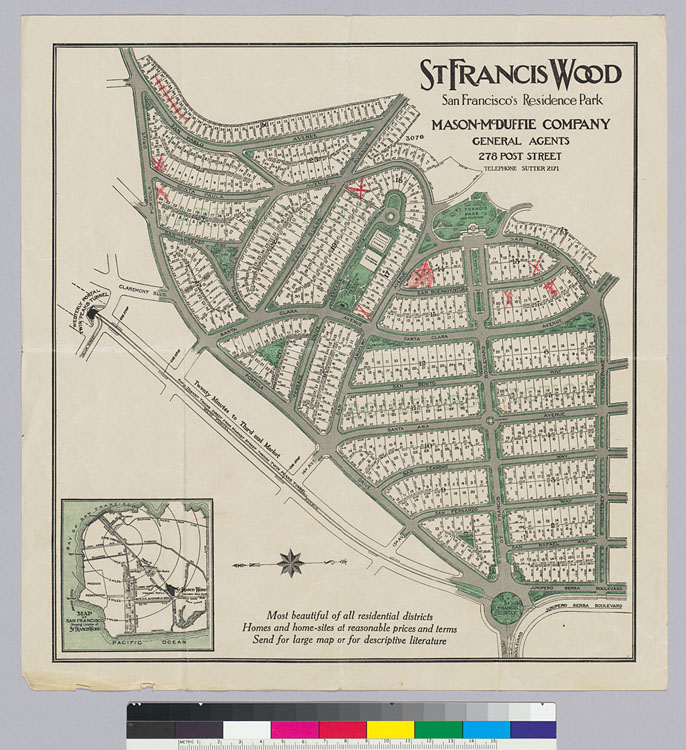
St. Francis Wood, as originally laid out in 1916. Diagram: Environmental Design Archives, UC Berkeley.

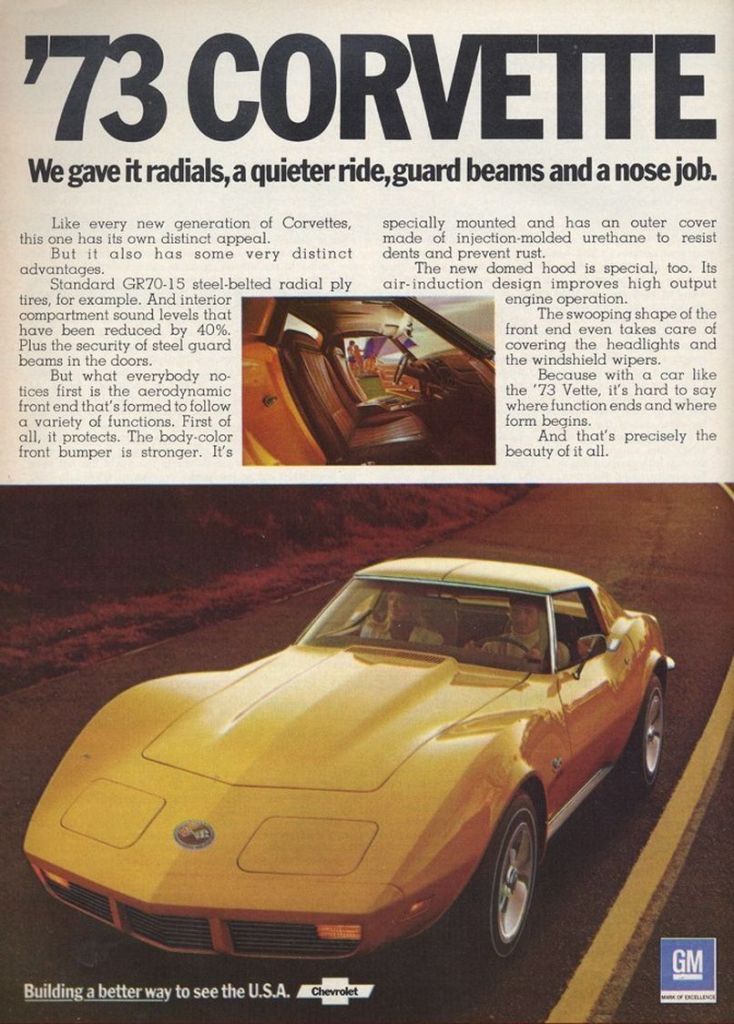
            The Santini house is a big one, up above the Beaux Art fountain on San Anselmo. A lot of plaster, a lot of dark wood, a lot of red clay tile. Maybe Mrs. Santini is the romantic, and fell for the 1920s Spanish schmaltz of the house. Two cars sit in the drive: A big old fifties Buick and, blocking it in, a late model Lincoln Continental in a coppery metallic the maker probably called some goofy name like “light ginger Moon-dust.” Why do hippies prefer Volkswagens? The Lincoln’s paintwork is like a free acid trip.

            The house next door has an empty drive, so I walk up it and look over at the Santini House. A lot of the curtains are drawn, but I can see into what must be the living room, and see movement. I wish I brought binoculars, but there’s a fine line between passing as an appraiser, and appearing to be a snoop. I squint, then start a little as I hear a door open. Standing perfectly still, I watch a man exit the house and go down the lengthy steps to the driveway. Keys jingle. A jacket ruffles as it comes off. The door to the Continental flashes, and then Santini is behind the wheel, the motor starting, the car backing out into the street. At first, I cringe, cursing softly to myself, since I’ve parked the Volvo a ten minute walk down at West Portal, then I look at my watch and realize that he’s heading out to his appointment in San Leandro.

            Back at the Volvo, I consider going home, then think again. I pick up the Xeroxed planner and re-examine my assumptions. If Santini is having an affair with Carpenter’s wife, sure, maybe it is in the gaps between the appointments on the calendar. Or it could be happening on the calendar. Who checks to make sure that every appointment in his book is one that really exists, and that he kept? A few fake appointments would be easy enough to shove in. Is Santini really going to San Leandro, during rush hour, for an early evening meeting about tilt-up-concrete? Or is he headed out to cocktail hour? Resigned to my fate, I start the car and head back to the east side of the bay. It takes more than an hour before I am in San Leandro, just south of the Oakland city border, a town of warehouses and twenty-year-old suburban homes. The schedule gives me the name of the real estate firm handling the project, so I drop off the Nimitz and use a phone book at an ARCO to look it up. It lists a job office in the industrial districts to the west of the town, near the estuaries and the Oakland Airport. I go drive by slowly and see a wide flat patch of several acres, and a cheap construction trailer, and a gravel lot with several sedans, including the copper Moonflake tan metallic spectacle of a Continental. While the project site is still just dirt, there’s fully built and operating warehouses all around me, and some have a few cars out in the lots, swing shift workers perhaps. I park the Volvo across the street between a couple other cars, pull out a paperback novel, and settle in. I get through about a hundred pages before I hear car doors, and look up to see Santini in the lot, talking with a couple other men in shirtsleeves and a couple men in work clothes. There’s yammering, some back slapping, some hand shaking, some smiles. Santini then gets into his rootbeer metallic nightmare and the brake lights flash on.

            I start the Volvo. I leave the headlights off. Santini backs the Lincoln out into the street and then begins to glide away. I back out of my spot, exit the parking lot, flip my lights on and turn after him. This time I am determined to do exactly what Carpenter paid me to do. I’m careful. I try to keep my distance, and once we are on the Nimitz, I try to let a few cars sit between us now and then, but sometimes he pulls ahead and I have to get impatient and do a little aggressive driving to keep up. He nearly loses me when he pulls off the freeway for Broadway in downtown Oakland, but I get over in time to make exit. I figure he is going back to the office in the Kaiser Building, but we pass it. I hang back further, worried I will get spotted in the traffic, but keep an eye on him. Eventually we pass the arts college, wind around the hills, and end up above Tunnel Road. He pulls into a side road to the right, somewhere above the Caldecott Tunnel, and I pass him, turn around at the next opportunity, and then follow up the road slowly. It’s a short dead-end, so I pop my headlights off and set the car down on the shoulder.

            I get out. It smells heavily of Eucalyptus. I walk slowly up the road, and as soon as I see the rear clip of the Lincoln, I pause. I cross the road, hugging the shadows of the now dark landscape and keeping my ears open. From somewhere is the sound of a television. From somewhere else, running water, as in a shower or a bathtub. A dog starts barking over at the house where Santini’s Lincoln is parked, making me reluctant to get closer. I can hear, over the distance: “Chill, chill. Chill!” It’s a man’s voice, but it sounds nothing like what I expect Santini to sound like. The dog quiets a bit. Then there’s the sound of footfalls, then a car door. I duck into the front yard of one of the houses, it’s all rhododendrons and sword ferns and California lilac. The tail lights flare up on the Lincoln. Santini backs out past me in the bushes, then pulls away. I watch as his tail lights flare at the edge of Broadway Terrace, as he dutifully puts on his left turn signal, as he drives away.

            The air is otherwise still. I can hear, again, the television in one of the nearby houses. The rushing water has stopped. I step out of the bushes and back onto the road, and cross it. There’s a mailbox at the edge of the road, near the driveway Santini had just been parked in. On it are foil-backed self-adhesive numbers, but no name. I memorize the address, and then hear barking from the dog again, this time much louder and much closer. I risk it, stick my head around a hedge, and look deeper into the drive. The house is low, modern, and mostly dark. I can just make out in the driveway another car, a shiny pale blue blob, an Opel GT. The barking begins to grow louder, and I am concerned that it might be me setting them off now. I step back away from the yard and walk towards the Volvo. As I get in and push the ignition key into its slot, I get a hair-brained notion. Searching through the car, I find the metal clipboard from my earlier foray in Saint Francis Wood. In the rear-view mirror, I straighten my hair out a bit, crisp up my shirt a little, then get back out and walk back towards the house. Passing it, I cross over to the hilly side, where I had taken a dive in the rhododendrons, but this time I climb up the slope up to the house there, march to the door, and ring the bell.

            The door opens: A woman in a terrycloth bathrobe, her gray hair in curlers. The look on her face reminds me of a cross librarian, or a highly disappointed owner of a dachshund. “May I… help you?”

            “Miss—” a little flattery never hurts—”I am with Alameda County.” I wave my clipboard slightly. “Pardon my interruption, but it’s about your neighbors across the way.” I lift the clipboard up, riffle through some notes. “Six-eight-six-zero Balsam. The low house down below.”

            “Oh. Yes?”

            “Well, we’ve been receiving complaints from several neighbors on this street, miss. Noise complaints, that sort of thing. Can you tell me if you’ve witnessed or heard anything unusual about the house?”

            “Well.” Her arm, once stiffly holding the door, now slackens. “Actually, yes. But not noise. It’s actually a rather quiet house, noise-wise.”

            “But…?”

            “The are a lot of cars that go there. Nice cars, fancy cars.”

            “Well there’s nothing wrong with making a fine living, is there, miss, miss—”

            “Missus. Missus Fletcher.”

            “I apologize, Missus Fletcher.

            “Don’t mention it. As for a nice living, I agree, except…”

            “Except?”

            “Except, how was that living made? You see, there are just too many cars.”

            “There’s one over there now, a small blue sports car. How many more are there?”

            “More than I can count. They come and go, all the time, especially in the evenings. They never stay long. It makes you wonder, well, I don’t know. The young man who is usually there is such a nice looking boy, but what does he do for a living, being there all day and all night, never going to work, and driving that fast car, and having all those visitors?”

            I scribble some notes down on my pad. Unexpectedly, she reaches out to grasp my wrist.

            “Oh, but I don’t want to get him into trouble, or anything! He seems such a nice boy.”


More each Saturday!

Enjoy this installment of Five-Eighty? Watch for future installments every Saturday morning during Fall, 2024. The next intallment will post on Saturday, September 16th, 2024. Previous chapters can be viewed here.

A note about sharing. While this novel is released to the public free of charge, I reserve all rights to publication. You may send links to friends, post excerpts on social media, or share it in any reasonable way, but please do not repost whole chapters, nor print and distribute paper copies. Please also, whenever possible, share a link back to the content.

“Pride and Ambition,” (Chapter 4, Five-Eighty: A Novel)

Five-Eighty is a novel about a private detective working in the suburbs of the Bay Area of California in the early 1970s. Each Saturday morning a new installment appears. As the events of this novel take place during the election season of 1974, the story will be released during this, the election season of 2024. May it prove an entertaining distraction from the news of the day. Please enjoy, and as always, comments are welcome!

—HF


Chapter 4

Given Carpenter’s reluctance to give me anything to work on, I drive over to Oakland to visit the main library and do a little digging. Santini, Richard. Born 1923, son of a small-time contractor in San Francisco’s North Beach. Navy during the war, he entered as Ricardo, but came back as Richard, and in forty-six married Aemilia Francesconi at Saints Peter and Paul, the same church where Marilyn Monroe married Mickey Mantle, the same one where Laura and I were wed. Went to work for his dad, and about twenty years ago inherited the firm, doing work as a subcontractor for Del Webb, building everything from office parks to Las Vegas casinos. Throughout the fifties, though, he remained a small player in bigger projects, never the lead, never the face, never the boss. There seems always to have been the possibility of straight razors in the darkness, a situation that changed only after he took on Carpenter as a partner in fifty-eight. Younger, hungrier, and (perhaps more importantly) more Protestant, Carpenter became the face of the partnership, the first name on the door despite his youth, a charmer who went to the right parties and knew which fork to use to open the oyster, if by oyster you meant the pocketbooks of respectable money. When Pat Brown rolled out his big education push, Carpenter and Santini got the contracts to build several community college campuses. When the Port of Oakland began to convert old railroad piers into a modern harbor, the concrete docks were built by Carpenter and Santini. And when they laid out the BART line past the Kaiser-built tunnel under the Oakland Hills, it was Carpenter and Santini that built the stations at Orinda and Walnut Creek and Concord. So much concrete, so much so that I wonder if he had done any work with my father down in Irvine.

Walnut Creek BART station, just after completion, circa 1972. Photo: BART.

            Despite what I learned, there is nothing in the microfilmed newspapers and old trade magazine at the library that helps me any with Santini’s other haunts. I look at my watch. It’s near seven. Gathering my notes I go outside, and find a payphone out front. Given how close I am, I pick up the phone, pop in a coin, and dial up Nick. The phone rings once, twice, three times, but no answer. After five, I set the phone back into the cradle and try to get my money back out of the machine, but to no avail: My dime is gone for good.

            The next morning, I pick up the Xeroxes of Santini’s calendar from the construction offices in the big Kaiser Building in Oakland, just off Lake Merritt, and then go sit in the Volvo by the lake and peruse the papers. The copies came from a large format daybook, the handwriting in it neat and consistent, but the entries are often scratched out in favor of other time slots, so that there are diagonal lines through many entries. Between all of these, there are leading lines and arrows, so that the entire daybook looks like an old Jay Ward title sequence more than an intelligible document. Santini is changeable, never keeping his promised schedule. Poor Matilda! In several places, her frustration shows in the wildness and haste of the scratched-out appointments.

            I untgangle that Santini has three appointments today. The first two are in the city, regarding a bid for a future phase of Embarcadero Center. The third is much later, in the early evening, at an industrial park project in San Leandro. Between there are five hours. What is to happen between these appointments is unclear. Will he go back to the office in Oakland? Will he go home to Saint Francis Wood? Will he go meet Iris Carpenter somewhere for a screw? In David Carpenter’s mind this is all easy. Just follow Santini, dammit. But follow how? From his meeting with the San Francisco Redevelopment Agency? I go find a payphone and call up a city beat reporter I know over at the Examiner, and ask if he knows of any meetings going on for Embarcadero Center.

            “No, should I? What do you know that I don’t?”

            “I can’t give you details.”

            “C’mon, bud! This is my work!”

            “Someone I’m trying to keep tabs on is bidding on a later phase. I’m trying to see if I can slip into his meeting without being detected.”

            No dice. No public meetings. Whatever it is, it is of the martinis and steak in the backroom variety. I thank my informant and hang up on him before he can bitch at me some more about life being a two-way street. Standing in the phone booth, I shut my eyes and envision sitting in the redevelopment agency lobby with some excuse—I represent the estate of a deceased property owner where the disposal of the estate is under contest, and where the property was sold to the agency, something of that sort—and bluff my way into waiting all day while the receptionist glares at me like a newly discovered corn on her toe. No, that isn’t going to work. I can park out front until I see Santini leave, but what if he leaves from a different entrance? Too thin an option. Staking out the office is pointless since if he returns there then Carpenter (or Matilda at least) would know that and my confirmation would be unneeded. And I have no idea where he would meet Iris Carpenter. These guys who think an investigator can just follow someone around everywhere are nuts. Most of the job relies on information, on people you can ask who know the rumors and gossip and can reduce your possibilities radically. The rest is spent in a public records hall somewhere, digging. It’s not Bullit. I’ve never been in a car chase in my life.

            I dig in my jacket pocket and find my roll of dimes, pop off a couple and put in a long-distance call to Los Angeles. A voice on the other end—high pitched, fast-paced, eternally annoyed—answers “Chisholm Construction, How may I place your call?”

            “Bill Chisolm, please.”

            “Who’s calling?”

            “Avon.”

            “Please hold, Mr. Avon.”

            I sigh. After a minute or two, the voice comes back. “I’m sorry, Mr. Chisholm is at lunch, but he should be back shortly. May I take a message?”

            I give her the number of the pay phone, tell her I will be there another half hour, and tell her my actual name.

            “I’m sorry, I thought you said you were Mr. Avon?”

            “It was a joke. I’m sorry.”

            “But you name is?”

            “Ken Chisholm.”

            “I thought you said you were calling for Bill Chisholm, we don’t have a Ken Chisholm.”

            “No, I am Ken Chisholm. I am calling for Bill Chisholm.”

            “What are the odds!”

            “Pretty good, since he’s my dad.”

            “Ohhhhh. Please hold.”

            The line goes dead again. No Muzak. Music doesn’t pour concrete is how my dad would probably say it. Ugh. Then eternity of silence finally ends.

            “Kenneth! What are you doing on this number? This one you gave Sophia isn’t your home or your office.”

            “I’m at a pay phone.”

            “Why are you at a pay phone?”

            Why is my life reduceable to a series of pointless questions? I only think this, though. Instead: “Work. I need some help.”

            “Are finances tight again?”

            “Relax, Dad, it’s not like that. I’m looking for some information, and I thought you might know something.”

            “Oh.” Tension deflates, audibly. “How’s Laura?”

            “Laura is fine. Better than fine. Business is starting to pick up now that a couple of those tract developments are coming together. Anyway, I only have so many dimes. So I have a question.”

            “Okay, shoot.”

            “What do you know about Richard Santini? I figure since you are in concrete and he’s done a lot of concrete construction, maybe you know something about him.”

            “Santini? Hummm…. Well, he’s up your way, Bay. He doesn’t really do anything down here.”

            “Sure, but you still must know some stuff. Mutual acquaintances. That sort of thing.”

            “Are you mixed up with him on something?” The question is light, forced casual, like when your mother asks so do you like this girl?

            “No, no. Nothing serious. Not directly. I just want to know some context. He’s involved in some projects I might do some work for, I want to know more before I get involved.”

            “Well, depends on what the project is. He’s a mid-level contractor. He’s done work for BART, and the city up there, and some other things along those lines. Mid-level public projects. He has done a few industrial parks with tilt-up concrete, but we’ve never worked the same projects, and he doesn’t have any stake in Irvine. Just be careful.”

            “Careful why?”

            Through the phone, I can hear him chewing on the end of the cigar that, for my entire time on this planet, I have never seen him light. It always struck me as hilarious, a Groucho Marx gag, but it was actually Dad’s defense, his ability to elegantly decline both drinks and cigarettes, neither of which he imbibed. Finally, “Santini is alright. Mostly. But his dad was a bit traditional in the Italian way, and he still has a lot of friends who own cemeteries filled with still-registered Democratic voters. I always wonder if he might backslide a little if he got crossed.”

            “Do you know anyone who might know him better? Someone I could talk to, quietly?”

            “Hummmm.” Chew, chew. “Yes, I can think of a few mutual acquaintances, but I wouldn’t want to send you to anybody too casually. You in any trouble, because of this stuff?”

            “No trouble. And if I can learn enough, I can keep it that way.”

            “I really wish you’d just go in house security somewhere. Throw in the towel. Come be one of my foremen.”

            “I’m not a concrete man.”

            “The paychecks would change your mind about that.”

            “So, mutual acquaintances?”

            “Hang on.” I can hear dad set the receiver down on his desk, then the muffled sounds of a drawer opening and some paper being pushed about. “Okay,” he says, “got a pen?”

            “Check.”

            He reads me out a number. “Harold Crocker. Harry. Yes, those Crockers. We were in the Army Corp together, and he’s still involved in development up there. Bechtel. Give him a call, drop my name. He’ll make time for you and he’ll keep it to himself.”

            I thank Dad, answer the requisite “I don’t know” to every question he poses about my brother Nick, promise to call home on the weekend, and hang up. Then I call out to Crocker’s office number, get his secretary. I tell her my name, drop Dad’s name, ask if I can get time with Crocker today, tell her I’ll call again in an hour to check back as I’m out on the road. I go back to the Volvo, get in, and point myself towards the Bay Bridge. In Chinatown I grab a cheap meal, then call in to Crocker’s office to find he’ll meet me at two for a late lunch at Tadich’s. I roll over there and get to the door at exactly two, and get shown to a small booth on the left side towards the back. Waiting there is a gray, balding man in a thin gray suit, his nose rounded and a little red, his eyes behind thick black-framed spectacles. He stands to greet me and shake my hand, and he only comes up to my chin. He’s one part Mickey Rooney, one part Nikita Khrushchev, but his voice (when it comes) is a bit gravelly from smoking and drinking, but flat and calm and hushed. It is the voice of an Exeter, or a Kent.

            “I called your father,” he begins, “and he explained a bit. Let’s order before we start though.” He hands me a menu. I scan it, put it down, and Crocker waves over a surly waiter. “Old fashioned. Hangtown fry.” He nods at me, and I put in an order for a shrimp cocktail and a rum-and-coke. He doesn’t ask if that’s all I want, as dad would have. He doesn’t offer me the charity of picking up the tab. He simply nods to the waiter, and then we are alone again. Reaching out, Crocker undoes the rope holding the curtains back, and lets it fall so that we are mostly enclosed. “Now, while we wait for the food and drinks, why don’t you tell me something about your work. I understand you are an investigator.”

            “Yes. I mostly do property recovery for construction firms. I also do a bit of financial work. Legal searches. Title investigation.”

            “Audits? Title searches?”

            “Sort of. Usually informal inquiries by potential investors. Sometimes you get land ownership locked in a trust, which is itself a part of another trust or estate. Or you get many layers of corporate ownership, so it’s hard to determine who ultimately calls the shots on a property. That’s becoming increasingly common these days.”

            “So how does this all fit in with…”

            The curtain moves slightly, then it parts from a waiter’s hand. Our drinks arrive.

            Crocker clears his throat. “So how does Santini fit in?”

            “I’m working a case that isn’t the norm. It’s domestic.”

            “As in divorce?”

            “Maybe. It’s too early. I wouldn’t usually take the job, but the client is in the construction and development field, and the job was referred to me by a good friend. So I’d like to help them.”

            “Sure.” He took a sip of his drink. “Until the food arrives, let’s talk about something else, and I’ll think a bit. How’s your old man, anyway?”

            We kibbitz for fifteen minutes or so about my dad, about my marriage and Laura’s real estate business, about the prospects for new housing starts in the Tri Valley and the possibility of more urban residential towers in the city, and then our food arrives. Crocker asks the waiter to make sure we aren’t disturbed. The curtain falls. Crocker digs into his eggs and oysters, making a good size excavation out of them before he puts down his fork. “I wish I could still eat like I could when I was in the army with your dad,” he says. “As it is, I’ve cut down to just four drinks a day and half the food I used to eat. Sometimes I think my world lives off rich food and alcohol, and I can’t keep up. I’ve always been able to take it or leave it, unlike a lot of the guys in my building. Or my field.”

            “Including San…”

            Crocker holds up a hand. “Let’s call him Dick.” He picks up the fork again, pokes at his omelet, then sets it back down. “You know the story of this dish? No? Well it was supposedly invented in the eighteen-forties. Some placer miner up on the American goes into town—town being Sacramento, probably—and he’s just loaded down by gold. It’s like leave on a Saturday night in the war. Money to burn, time to do something other than work, and every possible hunger a man can experience. It’s fun but it isn’t pretty. So this placer miner goes into town, as I said, and he goes to a restaurant and he asks for the most expensive thing the cook can think of. Well in those days, bacon was fought over and oysters were the stuff of kings’ lunch-pails. So this cook dumps them both in some eggs and, presto bingo, the Hangtown Fry, an omelet filled with the most expensive things money could then buy. I’m sure it was followed by a night in the saloon and later in one of the saloon’s dancing girls. Or two. Or more. That was my great-great-grandfather’s time—I come down from Edwin, the judge, Charley’s older brother. What’s funny is it hasn’t really changed, just that after the last blow-up the money isn’t in digging gold out of the river or the hills, it’s in putting rock and cement and concrete and steel back into them. But the arr-and-arr is pretty much the same. Maybe a bit more elaborate, but it’s still men who feel far from home even if they aren’t, men using their lettuce to buy a night on the town.”

            “So that’s the normal.”

            “So that’s the normal.”

            “And that’s Dick?”

            Crocker shakes his head. “No. He’s never been much for it. He’s a compulsive worker, driven. He shows up at the usual parties but he begs off before they get too wild. I was at a conference with him once, a shindig for the BART project. We engineered it you know. So for whatever reason we fall in together as part of a small group of engineers and contractors. We’re all around the same age. We all went through the war together. We all know the world similar. We all know how to use our arr-and-arr time to the fullest. Hell, Dick was Navy, their shore leave antics made us Army boys look like angels. But the day turns to night and the business part is over and the gang is looking to go get in trouble, and we go up to Dick’s room to get him to come along and he’s in there with a typewriter and a pack of cigarettes, working. And he begs off because he says he’s feeling he’s coming down with something. That’s a story everybody has got. Dick’s always getting headaches or the flu, or has an early morning the next day and needs sleep. But he’s also always up, always awake. He’s always got a drink in his hand but he’s never drunk. He’s always catching the eye of some lady, but he’s never got one on his arm.”

            “Is he just not… interested in women?”

            Crocker leans back and smiles slightly. “It’s not gay if you’re underway. An old Army joke about the Navy. But no. It’s not that. He’s obsessed with his work. He’s always bidding on something, always working on some new project. He’s driven like nobody else I know, and constantly frustrated that the world doesn’t work as fast as it should. He did some work on some stations for us and he got them done fast. No haste, either, no misplaced bolts or cut corners. But he was also a royal pain in the keister, because he was always demanding something from us we weren’t ready to give, whether it was a set of drawings or a sign off on an invoice. He works at a different speed than we mortals. Nothing makes him waiver.”

            “So you wouldn’t call him a ladies’ man?”

            “He’d have to have time for that.”

            “If he did fall for someone, who do you think it would be?”

            “Fall for someone? He’s married now. I don’t think it’s Grace Kelley and Prince Rainier—but then his wife is no Grace Kelley—but I think that’s enough for him. He’s a good Catholic. He is expected to marry and have kids. He’s done both. They have a nice house. They are well taken care of. Check, check, check on the list of good citizenship in his family’s world. I think that’s the extent of his idea of romance. I don’t know he has any romance in him. He didn’t grow up reading Ivanhoe, far as I can tell.”

            “So what sort of vices might he have?”

            Crocker picks at his food again, pulls a piece of bacon out of the wreckage, eats it, then pushes the plate away. “Pride. Ambition. Those are obvious. If someone was in the way of him getting something he wanted, he’d trample them without thought. He’s a steamroller. I think he wants all the things that his father never had, all the power and position that wasn’t possible for a wop grocer’s son even in the Catholic days of James Rolph. I think he wants, needs, a kind of nod from people like me, people who can trace back to the Floods and the Fairs and the Stanfords and that sort. He wants to be old money, or at least respect from old money. He wants to be on the inside.”

            “That’s what his partnership with Carpenter is about.”

            Crocker nods. “Carpenter’s all show and no pony, but he’s related to the right people, went to the right schools, and he can talk like a Mills girl. He can probably balance a book on his head while he walks, too. And Carpenter sure can cut a rug, you’d think he had been in the Navy. But that’s expected of his sort. Like owning race horses or breakfasting off champagne. Morally wrong, fashionably right.”

            “So if Dick did cat around? If he did have a wild side?”

            “Then he’s kept it damned secret. It would be far away, with no witnesses. And it would be scheduled well in advance.”


More each Saturday!

Enjoy this installment of Five-Eighty? Watch for future installments every Saturday morning during Fall, 2024. The next intallment will post on Saturday, September 16th, 2024. Previous chapters can be viewed here.

A note about sharing. While this novel is released to the public free of charge, I reserve all rights to publication. You may send links to friends, post excerpts on social media, or share it in any reasonable way, but please do not repost whole chapters, nor print and distribute paper copies. Please also, whenever possible, share a link back to the content.

“At the Three Star” (Chapter 3, Five-Eighty: A Novel)

Five-Eighty is a novel about a private detective working in the suburbs of the Bay Area of California in the early 1970s. Each Saturday morning a new installment appears. As the events of this novel take place during the election season of 1974, the story will be released during this, the election season of 2024. May it prove an entertaining distraction from the news of the day. Please enjoy, and as always, comments are welcome!

—HF


Advertistement for a 1972 Cadillac coupe, showing a large green car, above which is a misty-looking image (perhaps a dream image?) of someone skiing fast down an mountainside.
1972 ad for Cadillac

Chapter 3

It is a few minutes to four as I pull into the gravel lot at the Three Star, several miles north of Rancho Santa Rita, on the road to Martinez. A few old gas pumps sit out front, and a big low asphalt shingle roof overhangs plaster and shallow brick siding. Out front there is a Pacific Bell telephone booth and a smattering of big American sedans in various shades of indeterminate pastels, the one on the end being a brand-new mint green flake and white Landau topped Cadillac. I park the Volvo next to it and go inside through a windowless steel door. The Three Star is one of those places with a small stage in one corner, and a back room that used to be for pinball machines when pinball was viewed down upon by pastors and librarians. It is dark, the lights intentionally low to hide the yellowed nicotine smudge that is on everything, including the patrons. To the right is a long, upholstered bar, to the left small booths. In one at the back I see David Campbell Carpenter sitting with a glass of indeterminate brown liquor.

            I sit opposite of him. The shiny cherry red vinyl seat below me makes rubbery sounds and expels air.

            “What is this all about?” Carpenter asks.

            “Marriage. Much like your troubles, I imagine.” He grunts, or rather snorts, but says nothing else in reply. “Before we begin, I need to know a couple things. For your own protection.” He stares, I continue. “Is there any chance I will encounter anything with legal dimensions in the course of this job?”

            “Legal dimensions?” He takes a slug of his drink. “What’s that mean?”

            “Criminal activity.”

            “What are you talking about? What do you mean criminal? There’s nothing criminal about this.”

            “Well I need to know how likely it is that I might have to talk to the police. If you want me to fully protect your interests—”

            “Say, what is this? Look, shut up, will you?” I shut my yap, and watch as Carpenter readjusts himself in the booth as if suddenly discovering that he is sitting in a cold, wet, unidentifiable puddle. “Look, I asked John to recommend a reliable man.”

            “Anything. You tell me. Is not. Private.”

            He blinks.

            “If some cop decides they want to bust my balls, I can’t conceal your identity or your business, not for long anyway. There’s no such thing as privilege when it comes to investigators and clients. Unless there’s an attorney involved. If an attorney working for you hires me, what I find is covered under your attorney-client privilege. So any cop, any lawyer, any officer of the law can’t roll me. If this is purely a domestic affair, no problemo. But if anyone is involved in anything even slightly illegal, I might run into a cop. Hell, I might run into a cop just tailing your wife or your partner, even if everything is above board. So, before you tell me any details, we both need to know how likely your business is going to end up in front of authorities who can compel me to talk. And if that’s likely, we need to get a lawyer involved before you tell me one word more.”

            He took another draw off his drink and set it back down, the glass sweaty and mostly empty, what little of the ice that was left sliding idly around in the bottom as if circling a drain it vainly hoped was there. “I’m sure you think you’re smart, Kenny. And I suppose maybe you are. And I appreciate what you just said, really I do. But the fewer people that I tell about this the better. Now John said you’re smart, as in smart enough to know when to take orders and do what you’re told. Smart in a way people who actually work for their living get smart, because they have no other option. So how about this: I pay you double your usual fee—what is that, anyway?”

            “Fifty dollars a day, plus expenses.”

            “So a hundred a day. Plus expenses. Reasonable expenses. And you keep your mouth shut and your head down and don’t tell anyone anything. Deal?”

            “Being held in contempt of court isn’t worth a hundred dollars a day. Being thrown in jail isn’t worth a hundred.”

            “So it’s just how much it’s worth, right? So what do you want?”

            I pause. I realize that Carpenter is a man who thinks he can win any argument with money, and I’m not entirely convinced that he is wrong. “Two,” I respond.

            “Fine. Now can we get on with this?”

            “No.” I reach into my jacket pocket and pull out a small notepad. “What do you have in your wallet?”

            “Right now? I don’t know. Around a hundred maybe.”

            “You got a five? Or a ten?”

            “Probably.”

            “Give it to me.”

            “Now?”

            “Yes, now.”

            He reaches into his breast pocket and pulls out a big billfold, something Italian and leather. He pulls out a crisp portrait of Andrew Jackson and pushes it across the table at me. In my notepad I write him out an impromptu receipt and give it to him.

            “I’m now on retainer. You are now my client.”

            “Fine. Now will you please find out for certain if my wife is sleeping with Richard?”

            “When did you first begin to suspect this was going on?”

            “What difference does it make?”

            “It can help me to establish when and where and how.…”

            “I don’t care about that. Look, all you have to do is follow him, find out if they are together, and tell me. Simple.”

            “Well what about their behavior makes you think….”

            “Are you listening to me?”

            I put my pen down. “Yes.”

            “Then repeat after me: I am going to follow Richard Santini and find out if he is sleeping with my wife.”

            “Well, okay, but I already know he’s not sleeping with my wife.” I throw a grin.

            “I’m beginning to think I should take my ten dollars back.”

            “Sorry, but I need to know more if I am to be effective.”

            “No. You need to shut up, take your two hundred a day, not ask questions, follow Richard, and tell me whether he is sleeping with my wife. The end. That’s all. Exactly as you were told, and exactly as I am heavily overpaying you for. Get it?”

            “Sure. Sure. Okay. Well then why do you think Santini….”

            “Sonofabitch.”

            “It’s relevant! Is he missing at certain times of day or night? Are there specific days he seems to be gone, when it’s possible they might be together? I’m one person, I can’t follow him twenty-four-hours a day. I need to start when I’m most likely to catch him, and where I am most likely to catch him.”

            Carpenter grunts. Inside, I’m both pumped on adrenaline and elated that I’d just landed a mental torpedo in his midships. “Richard has a house in Saint Francis Wood, but he wouldn’t take her there. His wife lives there. He has a cabin up at Tahoe but I don’t think that’s close enough. So I don’t know where. And I don’t keep tabs on him on the weekends.”

            “And on the weekdays?”

            “We’re both in the field a lot. Job sites. Meetings. Business lunches and business dinners. It could happen anytime.”

            “And your wife?”

            “We keep different hours. I usually see her at breakfast, but not always.”

            “Any pattern to when you don’t see her at breakfast?”

            He let his mouth open, and he frowns, but then snaps it shut. Then, slowly: “Not really. That’s why you are to follow Richard.”

            “You’re probably right. Narrowing things down helps save time though. When your wife isn’t there in the mornings, I assume it is because she was gone all night? I mean, she was never in your bed that night, right?”

            Carpenter reaches up, puts one hand into the air, then looks around confused.

            “You have to order at the bar,” I say. He moves to get up but I hold up a hand. “Let me. What’s your poison?”

            Carpenter holds the glass tilted towards him and frowns down at the watery ice. “They claim this is a whiskey sour. I think it’s just whiskey that they waved a bottle of lemon juice over.”

            At the bar, I order (and pay for) two whiskey sours, then bring the insipid drinks back to the table. “So,” I say, “she just doesn’t come home those mornings?”

            “I’m not sure. We usually share a room, but sometimes things get busy. Sometimes I sleep in the den. Sometimes she sleeps in her studio.”

            “Studio?”

            “She paints. It’s the old chauffeur’s quarters, above the garage. It has a daybed.”

            “Alright. So it could happen overnight sometimes. Have you talked to Richard’s wife?”

            “God no. That old battle axe? She’s part of why I wouldn’t blame Richard for wanting to step out. She’s basically a premade widow with the face of a firetruck. She should be selling fortunes and garlicky tonics in North Beach. And if I said anything to her she’d probably tell Richard. And look, I don’t want you bothering her. Or him. I need you to stay invisible, got it? Our partnership benefits both of us. I don’t want to jeopardize it.”

            “You just want to know if he’s shtupping your wife.”

            “Yes.”

            “Got it.” I close my notebook.

            “No more unnecessary questions? Can you get on with it?”

            “Where would I be likely to find him this afternoon?”

            “I don’t know. Matilda would know.”

            “Matilda?”

            “My secretary. Our secretary. You spoke with her earlier.”

            “Could she get me a copy of his appointment book for the next week?”

            “No. I don’t want her knowing what this is about. But I can probably get it after six. I can work a Xerox. I’ll get it couriered over to your office tonight. Or is that a bad idea, what with your wife…?”

            “I’ll just pick it up from your office in the morning.”


More each Saturday!

Enjoy this installment of Five-Eighty? Watch for future installments every Saturday morning during Fall, 2024.

“Savoy Realty” (Chapter 2, Five-Eighty: A Novel)

Five-Eighty is a novel about a private detective working in the suburbs of the Bay Area of California in the early 1970s. Each Saturday morning a new installment appears. As the events of this novel take place during the election season of 1974, the story will be released during this, the election season of 2024. May it prove an entertaining distraction from the news of the day. Please enjoy, and as always, comments are welcome!

—HF


Chapter 2

7 o’clock the next day. Main Street in Rancho Santa Rita sits angled slightly against the sun, so that the little storefronts all along the west side glow brightly, none more so than the one on the corner of Interurban Road. It is one story only, but the corner of the building is all shades of yellow. The windows are framed in yellowish fake bronze, the glass is wavy and amber, the flat solid parts that aren’t glass are tall, narrow little tiles in gloss bright yellow, like a yellowjacket. Above, in backlit Plexiglass, a sign reads SAVOY REALTY. The letters are big, bold capitals, bank gothic but sloping in italics, as if they were poised to blast off into the future.

            Standing on the bronze-painted concrete corner stoop, I fish around in my coat pockets, hear jingling, and my fingers find the jagged edge of my keys. I insert them into the door, turn, and swing it slowly open.

            “Ken?”

            I cringe slightly, then hope the door is still hiding my face. “Hi, sweetheart.”

            “Where were you last night?” The emphasis is on the word last, as in, this is not the first time she has asked.

            “You’ll see.”

            Leaving the door open, I go back out to Main Street where the Volvo is parked, pop open the back hatch, and grab the small crate there. It’s heavy, but I manage to swing it out and set it on the curb without getting a hernia. Closing the hatch, I pick it back up, grimace, juggle it a bit with my knee, get it up against my gut, and then waddle in to the office with the box. Just inside the door, I set it down beside the walnut coat rack. It settles slowly into the oatmeal shag carpet like a boat sinking in an estuary. “You don’t mind if I leave these here? They’re heavy, and Ekberg will probably come get them in an hour or two anyway.”

            As I speak the sentence, I move through the room, putting distance between myself and the box and the prospect of moving it again. I pass the two bitter-orange tufted chenille armchairs and the low surfboard coffee table covered in copies of Newsweek, Vogue, and Sunset. I pass the bronze grillwork that divides the space from Laura’s office, with the grey Steelcase desk that she still insists is temporary, and the dusky pink metal filing cabinets, and the globular orange floor lamp her father bought in Italy.

Covers of Vogue Magazine, October 1974 and Sunset magazine, October 1974. The former shows a woman's face with a lot of make-up, with the headlines "there's a whole new way to look" and "American Beauty Collections," while the latter shows pink wildflowers in a dry meadow with the headline "Wild Idea--Wildflowers all around the home, now a planting type."
Left: Vogue, October 1974; Right, Sunset Magazine, October 1974.

            “What are those, anyway?” She asks, her nose down, one hand holding a thin gold fountain pen, her other steadying a minty green sheet of accounting paper. She makes careful entries on the paper.

            “Nail guns. Pneumatic. The latest thing.”

            “Ekberg’s?”

            “Until last week, yeah.”

            “Do I want to know how you got them back?”

            I pass the end of the row of rosy cabinets and enter the narrow hallway that even in the morning needs to be lit by the recessed brass can lights above. To the right, the wall is all pebble glass, the same amber as up front. The door is walnut veneer, and on it in little gilt plastic Swiss letters serve as my only shingle:

Kenneth Chisholm

Licensed Investigator

            I slip the door open. Inside is a walnut veneer desk with a dingy white swing-arm desk lamp, a crummy calendar blotter, many stacks of partially used legal paper pads, several Bic pens in various stages of life and death, one high mileage white rotary phone, and one chunky Dictaphone answering machine. Two fiberglass Herman Miller chairs with ratty beige upholstery sit on one side of the desk, and one orange Steelcase executive chair sits on the other. To the right, the plastered partition wall goes up to a line of amber pebble glass transoms against the asbestos ceiling tiles, and these glow faintly, with twice-filtered daylight from the street out front. Below the transoms is a large corkboard pocked all over by thumbtacks in more colors than a Coca-Cola commercial, pinning down everything from old receipts to business cards to invoices to scraps of paper with tangential notes scrawled in my crabbed hand. The opposite, back wall held my own row of cabinets, grey surplus U.S. Navy from Mare Island, waist high, and topped with a slab of redwood donated by a money poor, but building materials rich former client. This was now the office bar. On top is an electric percolator, a bunch of thick ocher cappuccino cups and saucers; a can of Sanka and a can of Maxwell House; a broken International Harvester mug holding spoons and an errant pencil; a stack of square napkins stolen from a bar; and a few mismatch old-fashioned glasses. Rounding it out are three bottles: one of Old Overholt, one of Stoli, and one of Kahlúa that my brother Nick got in Tijuana. It will make a useful hair-of-the-dog someday.

            The morning dies slowly. I listen to my three messages—one from Ekberg saying he will be by at eleven, one from the shooting range wanting to know if I want to renew my membership, and the third from a David Carpenter wanting to know if he can come see me at three. I ring him back, and get a snippy sounding secretary who confirms the appointment. A man with a secretary who takes his calls is not usually a nobody. I pull out the Yellow Pages, an old copy of Who’s Who in California, and on a hunch a directory from the Associated General Contractors of California. I start in the latter. David Campbell Carpenter, Carpenter and Santini Construction. It rings bells. Something about the towers going up in the old produce district in the city, and maybe something to do with some stations on the Concord BART line. I never get to the Who’s Who.

            I go to the little shoebox restroom at the back of the building and freshen up—some water on my face, a comb through my hair, a little cologne as impromptu deodorant. Ekberg drops by, picks up his repatriated tools, promises a check by the end of the week, slaps me on the back and leaves a big dusty handprint on my tweed sport coat. I clean it off carefully with a lint roller after he leaves, and Laura secretly watches me out of one corner of her eye as she pretends to read the Chronicle.

            “It’s not nice to laugh at your husband.”

            “Uh-HUH.” She turns a page, loudly, rattling it like a cookie-sheet thunderclap in a grade-school play. At noon she calls the coffee shop down the street and gets them to send one of their girls over—she really can talk anyone into anything—and we get some egg salad sandwiches and 7-Up, and I brush my teeth after, feeling foolish but smart about it. Later, she gets a couple customers—young married buyers, shopping around casually, checking out the town. By three the office is once again pretty empty. I’m just finishing the puzzle from yesterday’s paper when the front door opens and shuts.

            “Excuse me,” I hear through the partition wall, “I’m not sure…”

            “You are,” Laura interjects.

            “Excuse me?”

            Laura: “You’re confused about being in the right place. So you are in the right place….”

            This again.

            I stand up and stick my head and torso out the door. “It’s alright,” I say. “Mr. Carpenter? Come on back, I’m Ken Chisholm.”

            David Carpenter is well over six feet tall and I suppose you might say handsome, if you like a greyhound sort of look. Some women do. It makes the dark blue chalk-stripe suit look a bit too big on him, as if there’s nothing under his shoulder pads but air. His tie is a restrained Yale stripe, a bit too billowy, too silky, echoing his hair which is just a bit too pale brown to make up for its rapidly decreasing volume. As he comes into my office, he glances around briefly, looks at the chairs on his side of the desk, sniffs slightly, then settles into one of them, his legs set wide.

            “I believe you know a Mr. John Yorba.”

            “Yes….”

            “How do you know him?”

            I settle back in the chair, leaning into its sprung base. “We went to law school together.”

            “You didn’t finish?”

            I sit forward. “I found another line of work first. What can I help you with, Mr. Carpenter?”

            “Yes.” Carpenter’s eyes look around the room again, light briefly on the bar, come back on me. “Yes, I suppose so. John Yorba is a friend of a friend. He recommended you.”

            “I gathered as much.” I get up and grab two cleanish glasses off the bar. Carpenter looks like he’s about to object, but then instead of the three bottles on the bar I return to the desk and from out of one of its drawers place a bottle of middling-good Scotch, and pour us both a finger.

            Carpenter takes a tentative sip, looks down at the glass, looks at me, and says “not bad.”

            “Gift of a client,” I say, then wonder silently to myself why.

            I take one of the legal notepads from the desktop, rip a few used pages off the top of it and toss them aside. With a ball-point pen I put down the date, time, and Carpenter’s name. Below this I write “Initial Interview Notes,” and then below that start a new line with the number one in a small circle. “So how can I help you, Mr. Carpenter?”

            “I’m worried about my wife.”

            W-i-f-e, I write next to the number one. “In what way?”

            “Lately, she’s been very quiet. Her name is Iris, by-the-way.”

            I-r-i-s C-a-r-p-e-n-t-e-r. “…and what does Iris do?”

            “My wife? Do? She’s my wife. That’s what she does.”

            “She has no job? No hobbies, no causes, no social circle?”

            “Oh. That. Well. Yes. She has some charities, some hospital thing in Oakland I believe. And she knows several women at the club. We live in Belvedere, normally. Though we do have some land out here too, an old rancho. Small house. Some horses. That sort of thing.”

            I write that sort of thing on the pad. “So she isn’t involved in your business, then?”

            “No, why would she be?”

            “I’m sorry, I thought you said John Yorba recommended me.”

            “Yessssss….”

            “Well, John knows I specialize in construction and development work. Security consulting. Equipment recovery. Forensic finance sometimes. That sort of thing. This sounds… domestic.”

            “Yes. It is. But it’s also not. You see, I’m worried that Iris might be having an affair.”

            I put down my pen. “I’m sorry, Mr. Carpenter. I should stop you there. I don’t take divorce work.”

            “I think she is having an affair with my partner, Richard Santini.”

            Throughout this entire interview, the door to my office had been ever so slightly ajar. From the few years we’ve been in the building, and from several more of marriage, I know that Laura’s hearing is not insubstantial. I also know that my not taking domestic cases is part of the grand bargain by which our two enterprises coexist. I also know just how empty my bank register is looking these days, and how long it would be before Ekberg made good on his promised check. I tear off a blank sheet of legal paper from the bottom of the pad, and on it write “4 PM” and the name of a roadhouse several miles north. I fold this and pass it to Carpenter. “I’m sorry,” I say carefully, clearly, “I don’t think I can help you, Mr. Carpenter.”

            He takes the paper from me, scans it quickly, then sticks it in one pocket of his suit. “I understand,” he says, standing and sticking out his hand. I see him out to the front door, shake his hand once more, and close it behind him.

            “You’d think John would know you didn’t do divorce work,” Laura says.

            “Yeah,” I say. “You’d think.”


More each Saturday!

Enjoy this installment of Five-Eighty? Watch for future installments every Saturday morning during Fall, 2024. The next intallment will post on Saturday, September 16th, 2024. Previous chapters can be viewed here.

A note about sharing. While this novel is released to the public free of charge, I reserve all rights to publication. You may send links to friends, post excerpts on social media, or share it in any reasonable way, but please do not repost whole chapters, nor print and distribute paper copies. Please also, whenever possible, share a link back to the content.

Introducing Five-Eighty, A Novel

Five-Eighty is a novel about a private detective working in the suburbs of the Bay Area of California in the early 1970s. Each Saturday morning, from now until election week, a new installment will appear. As the events of this novel take place during the election season of 1974, the story will be released during this, the election season of 2024. May it prove an entertaining distraction from the news of the day.

A note about sharing. While this novel is released to the public free of charge, I reserve all rights to publication. You may send links to friends, post excerpts on social media, or share it in any reasonable way, but please do not repost whole chapters, nor print and distribute paper copies. Please also, whenever possible, share a link back to the content.
Please enjoy, and as always, comments are welcome!

—HF


Chapter 1

It is dark. I can’t see very much. I’m not sure if anyone is watching me or not, and there really isn’t any way I can be sure. Knowing that doesn’t help me any. My mind is racing with all the possibilities: A security guard in a car, prowling the perimeters of the half-finished subdivision; another guard with dogs, walking the lots; a cop going by, slow on the road, noticing the bolt cutters in my hand and watching, waiting for me to take them up against the cyclone fence and snip, waiting so he can pop me. I am not a thief, I tell myself silently. I am not a thief. But try telling that to a sheriff’s deputy out in the darkness, at ten p.m., on a Sunday, with bolt cutters in your hands, and an old gym bag over your shoulder.

            There was nothing for it, though. Snip, snip, and a lot more snips, then I push the fencing apart, tuck my arms low, and duck through, feeling the sharp exposed edges of the wire pull at my work jacket and my arms and my face, witch’s fingernails. The ground on other side is uneven, graded but not smooth or landscaped, pocked here and there with low weeds. A dozen or so yards and I’m on the pavement of the unfinished road. I turn right, walking down the curving tarmac surface, just an undercoat not yet topped with the final layer. It sticks to my boots a bit, like old flypaper. To my left, to the northeast, I can sense more than see a great shadowy hulk against the sky. It had to be Mount Diablo, the lights of the Pittsburgh steel mills on the other side throwing it into a vague relief, though I couldn’t see the beacon that should be on top.

            Knock it off, Ken. This isn’t Space Mountain. Pay attention to the situation, not the scenery.

            Up ahead on the road I can see the little cluster of the materials yard, the small storage shacks, the portable office dark and locked up. I approach the shacks. They are padlocked, but the jaws of the bolt cutters fit around the hasps nicely. A firm squeeze, and I break through the set on the first shack. From one pocket I pull out a flashlight, slip through the now open doors, and turn it on. Inside there are shelves stacked with supplies: Boxes and boxes of nails and screws, rolled flashing, pre-cut headers for doors and windows, but no tools at all. I backtrack and cut open the lock on the second shack. Bingo. Tools, mostly hand tools, but also rotary power saws, and, over on a work bench at the back, what I was looking for.

            I walk to the bench. On top sit five silver guns, like oversized hair driers but sprouting a mean looking mechanical ferrule where the heat should come out. From the front of the guns, running down at an angle to the bottom of the handle and past, a big black gizmo that looks like nothing if not a straight clip from a Thompson submachine gun. Each metal casing carries a cast maker’s mark reading DUO-FAST.

Cover page of the 1969 catalog for Duo-Fast, makers of staplers, tackers, and nailers.
Cover of the 1969 DUO-FAST catalog

            I reach into my breast pocket and pull out a small slip of paper, unfold it, and let it catch the light. On it I have written four sets of numbers. I turn over each gun slowly, and find four with engraved numbers on the handles matching the numbers on my list.

            I take the empty gym bag down from over my shoulder, and set it on the floor. I stick the bolt cutters into it, and atop them put the four matching guns, then zip it closed. The flashlight I douse, stowing it in my coat pocket, then I pick up the now quite heavy bag and lug it towards the door and exit the shack.

            The walk back to the fence takes three or four minutes. Once I reach the fence, I reach through the hole I cut and set the bag down outside of it, then follow it through. The road is quiet. I walk the narrow shoulder a few dozen yards. Ahead, around a small curve, I see my boxy Volvo wagon, its buttercream yellow paint seeming to glow even in the darkness. I sling the old gym bag into the back, get in, start her up, and pull away, another job done.


More each Saturday!

Enjoy this installment of Five-Eighty? Watch for future installments every Saturday morning during Fall, 2024.