
Five-Eighty is a novel about a private detective working in the suburbs of the Bay Area of California in the early 1970s. Each Saturday morning a new installment appears. As the events of this novel take place during the election season of 1974, the story will be released during this, the election season of 2024. May it prove an entertaining distraction from the news of the day. Please enjoy, and as always, comments are welcome!
—HF
Chapter 17
I sleep uneasily. More than once in the night I almost end up on the floor, turning and shifting. My dreams are like commercials, brief interludes between wakefulness, offering products I cannot have. In one, I am following Iris Carpenter in her sexy Italian car, but it stops at a stop light and she gets out to confront me, right there in traffic, but instead of Iris it is Laura. In another dream, I am sitting in front of David Carpenter’s desk but in an office in some other city, neither Oakland nor San Francisco, and he is cutting me my paycheck, and I am thrilled at the size of the pay, but then I notice that the check is drawn from Chisholm Construction and my hands are covered in cement dust. In another, I am driving over the Richmond Bridge when it begins to fall apart over my head, raining down chunks of pavement on the car, and then the car begins to ring, ring like the alarm on a bank vault or a bedside clock. Some part of me starts, and my eyes open, and I realize the ringing is there, in the kitchen. I glance at the clock on the wall above the fireplace and make out the hands to read something like six in the morning.
The phone stops ringing. I swing my legs around and put my bare feet on the carpet, brush some stray lint off my boxers, and use my hands to rub the capillaries in my face. I feel as if I have drank too much, even though I have not. The phone begins to ring again.
I walk to the kitchen, grab the yellow plastic receiver, and put it to my ear. “Hello?”
No response.
“Hellllllo?”
Nothing. I curse aloud but softly and put the receiver back in its wall cradle. It is still dark enough that the kitchen is hard to make out, so I flip the wall switch on, immediately regret it, flip it back off again. My eyes adjust, and I find the coffee can and the espresso pot and start a batch.
The phone rings. Same routine. I hang it up, hear the burbling of the Mokka pot, and pour a double into an old cup that had probably been stolen years ago from Enrico’s in the city. Or maybe the Greco. Behind me, a dull shuffling sound, and I turn. Laura stands in the doorway from the living room.
“Did you make enough for another cup?”
“Of course,” I reply.
I set out another cup, and fill it. Behind me, the phone rings again. Laura picks it up as I turn.
“Hello? Hello, is anyone there?”
“It’s been like that all morning,” I say.
Laura, into the phone: “No, he’s not here. He doesn’t live here.” I raise an eyebrow, hoping to elicit some information about the caller from Laura, but she ignores me. “No,” she says again. “I don’t know, I’m sorry.” She hangs up the phone.
“What was that about?”
“Someone looking for Nick.”
“Did they say who they were?”
“Yeah, someone named ‘Al.’ Something about how he’s sorry how things have gotten but now it really is important that he talk to Nick, and to pass it along.”
“Weird.”
“Yeah.”
“And, well, about the case….” I start. Laura shoots me a dark look and I lose all ability to continue the conversation. “Look, I’m sorry—”
“No. Too soon.”
She kisses me gently then goes to shower and get dressed. At eight she leaves for work, and I go about starting my own day.
What annoys me the most, I decide, is that there’s none of Leonard French’s fingerprints on any of the Paseo Plaza documents. I don’t expect his name right out in the open, but there should be some trace of a shady deal somewhere. A minority non-voting stake in the project, perhaps. I know there is fire. Why isn’t there a sign of smoke? The Xeroxes of the documents don’t help me any, spread over the coffee table and the floor. It is all black-and-white, all printed clean and clear and crisp, all business. Nothing seems missing. The renderings of the buildings are most annoying of all, they look so innocent, their pencil lines precise as if hiding nothing, their monochrome ink washes transparent with nothing beneath. This is a wholesome project. It is a cold glass of milk, a bowl of strawberries, as innocent as the neatly cleaned and polished maple coffee tabletop.
I don’t really want to go rattling Lenny French’s cage. I don’t feel like it.
And anyway, why was someone trying to call Nick at six-something in the morning? And here?
I go to my study in the far corner of the house. In the desk drawer is a small turquoise address book. I flit through the many crossed-out numbers in the book before I find the youngest number for Nick. Picking up the beige receiver off the desktop rotary phone, I dial. I hear only a repeating burr, over and over, constant. I set the receiver down. A quick breakfast, a suit over my skin, the Xeroxes packed into a briefcase, I try again. Nothing. I make lunch. I try again. I still get nothing.
I go out to the car.
The drive to Oakland is the same as it ever was, smooth and uneventful except for a little bit of Bay Bridge traffic. I swing down off the double-deck Nimitz into downtown Oakland, down past the limp tourist trap of Jack London Square (which should have just been called Jack London Parking Lot) and then down to the ramshackle warren of old wood warehouses where Nick keeps his little studio. The narrow street has the same smell of sawdust and reefer that it always has, and I worry the Volvo into a parking spot and bound around the corner, through the little courtyard-cum-driveway, up the stairs, into his apartment with my key. Inside it is the same mess it was the last time I was there, trying on tuxedos. The thin layer of dust on the dresser suggests it hasn’t been visited by anyone else since.
Back outside in the courtyard is a big old prewar Cadillac, its folding hoods bent up like a chicken before a stick-up gang. Under one of these contraptions a man in coveralls crouches, his hands buried deep in the mechanical psyche of the car.
“Excuse me.” I approach, and point across my body up at the studio apartment space. “Have you seen Nick?”
A head above the workman blue shoulders pops upward. It shakes, a negative.
I introduce myself across a gap of maybe a dozen feet. “Any idea where he’d be?”
“Well, he sure does get around.” The mechanic unbends a little, his narrow face turned slightly so he can glance at both his task and at me. “Have you tried that girl of his?”
“What girl?”
“Hrm.” He reaches under into the engine and pulls at something, hard, but whatever it is, it won’t come out. “Something with an S. Stephanie. Steffie.” He jiggles something on the engine again. “Stefania. That’s it, Stefania.”
“Where would I find Stefania?”
“Berkeley, I think. Dunno. Then again maybe he’s at one of the card clubs. He could be anywhere, really.”
In my head, I immediately picture some Sacramento heiress to a minor planting fortune, twenty-one, a tennis wiz, a senior at Cal. A younger, less ironic Joan Didion, or a Patty Hearst but with only superficial interest in politics and a slightly smaller bank book.
“Is there anyone who would know?”
“What am I, a bartender?”
Back up the stairs, I go over to one of the night stands and rummage around. No sign of Stefania, but there’s a matchbook for the Key Club, in Emeryville.
Back on the road. Emeryville, sitting at the eastern end of the rat’s nest of roads that serve the Bay Bridge, is a kind of leftover space where normal rules don’t apply. One feature of this status is the high number of quasi-legal card rooms, glorified bars where poker goes a bit beyond the definitions of “a friendly game.” The Key Club is one of the older survivors, a slimy dive with a jaunty sign sitting slammed to the ground on the first floor of a large SRO hotel. I park the Volvo around behind the building, and make use of the discrete back entrance to enter the dim gloom of sticky floors, sour beer, and glowing green lamp shades. It’s a Wednesday, midday. Three old men play cards at a table way up front, and a bartender behind the cheap padded bar wiping the same glass, over and over.
I sit on a vinyl stool. When the bartender comes over to ask for my choice of drink, I hesitate, then order a beer, chalking it up as rent. He brings me one of the short, gun-shell-shaped bottles of Michelob, pops it open, and sets it down on the bar-top. “I have a question,” I say, as I push over a dollar bill, and then set a five atop it. “Have you seen Nick Chisholm around lately?”
The bartender eyes me, then puts one finger out to touch the bills. Deftly, he snaps the dollar down to the table top and slowly pulls it back, leaving the five where it was. Halfway to freeing the dollar, he stops. “Who’s asking?”
I explain the situation, even going as far as showing him my driving license.
“Yeah, I dunno.”
“Are you sure?” I put another five down. “Or have you ever heard him talk about a woman named Stefania?”
Without forethought, the bartender breaks into a grin. “Oh, yeaaaaaaaah. I’ve heard all aboutStefania.”
“I haven’t heard a thing!”
“He never told you?” The bartender leans forward, putting both hands on the back edge of the top. “Well, from everything I heard, she’s a hell of a woman. He’s never brought her in here of course, for a while I thought maybe she was just made-up.”
“What’s so remarkable about her?”
“Everything, man. She just has… everything.”
“So they’re together?”
“You sure you’re his brother?”
I take a swig of the Michelob and shrug. “He think I’m a little sheltered.”
“Well if he’s with Stefania, I don’t think he’ll want anyone checking in on him. Interrupting him, you know. And if you’re any kind of brother you wouldn’t want to, either.”
Light suddenly flares into the room to my left, and I realize it is because the front door has opened and closed, admitting a pair of customers. Two middle aged men in work clothes, carrying lunch-pails, workers from Sherwin Williams or General Electric or maybe Heinz, a bit further up the road. The bartender goes down to take orders. A few minutes pass and he makes his way back up to me.
“So, Stefania. Where can I find her?” I reach out and push the two fives, still on the top, a little closer to him.
The bartender hesitates, then leans forward, puts a cocktail napkin down in front of him, and takes a Bic pen from his barber-shop striped waistcoat. He pushes his work across at me, then takes the two fives and slips them in his pocket.
“Got a phone book?”
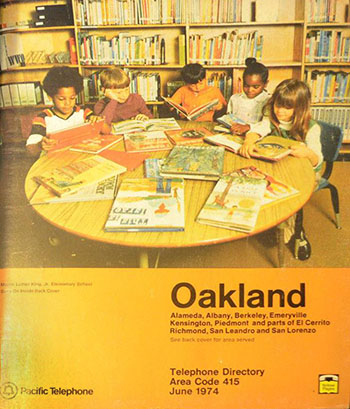
In a few minutes, I get a Bell book for my lap, and I flip through the white pages looking for the name he’s given me, Stefania Stiles. When I find her, she’s surprisingly close, on Sixth in West Berkeley. Borrowing a pen, I scrawl the house number on the cocktail napkin, thank the bartender, and go.
Outside, back in the sunshine, my eyes hurt, but I can’t tell if it’s the sudden bright light or leftover effects of the card room’s atmosphere of stale beer and old cigarettes. The Volvo, miraculously, is unharmed, no windows broken, nothing missing. The drive up San Pablo is a series of gas stations and factories and old roadside dives from the days before the freeway was built. Nothing looks clean, nothing looks busy, nothing at least except for the factories. Behind the mock Spanish façades there would always be ketchup made.
At Channing I turn left and tuck into the neighborhoods. So close to industry, they aren’t good, clusters of tiny low-slung bungalows and an occasional Victorian pile, peeling paint all around, much of it either white or a gray that obviously came back in buckets in the trunk of a car on the last drive back from the Richmond Shipyards in 1945. Unmown lawns. Vegetable beds in front yards. Broken fences. Asphalt shingle roofs with shingles starting to peel up. Non-code additions to the sides and backs of houses. The whole place feels wild, forgotten, in between, a lair.
I prowl the road slowly, moving north closer to University Avenue. Here and there, lawn signs from yesterday’s election, signs mostly for Senator Cranston, the Democrat, but also a few for someone for the Peace and Freedom Party who, appropriately, is named “Justice,” and a few more for Pat Brown’s son for governor. Looking at the cocktail napkin, I compare my scrawled numbers with the addresses, and find a boxy bungalow on the west side of the street, sitting a bit higher than the rest. I cut diagonally across the road and park the car, wrong-way-forward, on the opposite side. Most of the yard sits empty, plain grass and some old scraggly rose bushes that gave up trying long ago. The house itself is an off pink, the color of Mamie Eisenhower on a bad morning. I mount the six steps, feeling the mixture of reluctance and excitement that always hits me before talking to a stranger. I knock, the door creeks slowly open.
“I’m looking for Stefania?”
Through the door I can see a tall figure, a black woman, her hair in a tight Afro, wearing a tight cable-knit turtleneck sweater and dark wool pants. “Can I help you?”
“I’m looking for Nick Chisholm. Is he here?”
“Who wants to know?”
“I’m his brother.”
She pulls the door open, inward, a bit wider. “Prove it.”
I feel my eyebrows raise, but reach back into my hip pocket, pull out my wallet, and hand her my license. She reads it, her shoulders fall a little, she hands it back.
“Sorry,” she says. “It’s just a lot of people have been looking for him lately, and I don’t trust any of them.”
“Really? Who’s been looking for him?”
The woman nods to her left, and the little alcove of the porch where a bench is. She steps through the door and pulls it shut behind her, and leads me to the bench and sits. The bench is not large, and I squirm a little sitting in it, but the woman seems perfectly comfortable.
“So far there’s been two other men. Oh, and I am Stefania,” she says, reaching across her body to offer her right hand for a shake.
“About these men…”
“Well, one was kind of a weasel of a man, more a boy really. Real angry but trying to keep cool, kind of desperate to see Nick. He was here the other day. Then this morning was some delivery guy saying he had a registered letter or something and needed Nick’s signature, but something about him bothered me.” From a pocket whose location I could not fathom, Stefania brought out a gold cigarette case, something straight out of a 1920s gentleman’s wardrobe, popped it open, took out a slim cigarette, and lit it.
“Was Nick here?”
“No.” Stefania took a long pull of the cigarette. “He hasn’t been for a long time.”
“How long?”
“Months.” Another drag. “He started to see someone else, the way he does. He drifts in, he drifts out.” She casts her eyes over at me. “I’m sorry. He’s your brother. I don’t mean to be mean. Anyway, why are you looking for him? Why is everyone looking for him? What’s he done? Sleep with the wrong man’s wife?”
I shake my head. “I don’t know about anyone else. I just haven’t heard from him in a few days and I’m a little worried.”
“He’s a big boy. He’ll be fine.”
“Can I ask… how did you two meet?”
“A poetry reading at Rainbow House.”
“Who was reading?”
“Me.”
“Oh.” I shift in the bench. “Well, do you have any ideas where he might be staying?”
“I guess you’ve already been to the studio down by the water?” I nod. “Is his car parked at his apartment?”
“His car—wait, apartment? What apartment?”
Stefania shoots me a look.
“Nick’s never shared much,” I say. I feel my face flush, but she doesn’t seem to notice. “Where is this apartment?”
“Fourth and 17th, other side of the lake. Big place on the south corner. Number 7.”
I stand. I thank her. “Say,” I ask, “did you see the cars from any of those other guys who were here looking for Nick?”
“Only the first one. Something small and blue, I didn’t get a good look.”
“Domestic or foreign?”
“Too small to be American.”
At a phone booth on San Pablo, I call to Laura’s office, to let her know what I am up to. When I ask if Nick has called, she tells me no. “But I have other news,” she says. “Those missing ballots? They showed up finally.”
“Where?”
“At the impound lot where the elections courier’s car is, with a big U-shaped hole in the passenger side.”
“What happened?”
“Narcolepsy. He fell asleep at the wheel. He’s at Highlands now, broken nose, broken arm, but otherwise okay.”
“And the ballots?”
“At Alameda County Elections, being counted. The seals on the boxes were still intact. The incorporation vote was up by ten points, though, so it’s unlikely they’ll change the outcome.”
I ring off. Back in the car, I take 80 to 880, feeling like I am a taxi driver now, for all the back and forth I had done all day. I just miss the rush hour window, and in the darkness the tail lights ahead of me continually recede, making space for the nose of the Volvo. I get off at the same ramp I used earlier, but this time I cruise around the bottom of the lake up to Eighteenth. At Park I turn right onto Fourth, pass the big contractor-grade apartment block on the corner of Seventeenth, then park the car around the corner, in front of a house on Foothill. I walk back along the west side of Fourth, and across the street see the three-story apartment building, like so much that had been built in this neighborhood over the last decade or so, its plain stucco walls, its thin aluminum-framed windows, its flat roof slammed on at the least possible cost. The first floor is entirely a row of garages. I move to cross the road when one of the garage doors begins get soft around the edges, so that I wipe my eyes, thinking that they’ve gone blurry for some reason. The softness around the door begins to solidify, and my nose confirms the smell of smoke. The doors suddenly buckle outward, reducing to free-floating panels slowly cartwheeling into the street. A wave of air and heat hits me, and I hold up an arm. From the opening of the garage, a great candle of fire runs up the façade of the building, at its base the tail end of an Opel GT, its blue paint peeling rapidly in the heat.
More each Saturday!
Enjoy this installment of Five-Eighty? Watch for future installments every Saturday morning during Fall, 2024. The next intallment will post on Saturday, October 28th, 2024. Previous chapters can be viewed here.
A note about sharing. While this novel is released to the public free of charge, I reserve all rights to publication. You may send links to friends, post excerpts on social media, or share it in any reasonable way, but please do not repost whole chapters, nor print and distribute paper copies. Please also, whenever possible, share a link back to the content.
 Harbour Fordyce