Five-Eighty is a novel about a private detective working in the suburbs of the Bay Area of California in the early 1970s. Each Saturday morning a new installment appears. As the events of this novel take place during the election season of 1974, the story will be released during this, the election season of 2024. May it prove an entertaining distraction from the news of the day. Please enjoy, and as always, comments are welcome!
—HF
Chapter 14
I leave the Caddy along a side street in Piedmont, then swap to the Volvo to drive home and catch an early night, but seeing as I have to be up again early, all I do is toss and turn and keep waking. At four, I give up, and creep into the kitchen to make another thermos of coffee. I make too much noise, and a bleary-eyed Laura ambles into the great room wearing a yellow robe, her reddish-brown hair all wiry and akimbo, her hands trembling in the cold room. “Go back to bed,” I tell her, softly, almost a whisper, but she insists (without even saying a word) on making me a sandwich of Italian ham and salami and fresh Mozzarella. When she takes out the rolled aluminum foil to wrap it, the sound of it is so loud against the early morning stillness that my ears hurt. Taking the metallic torpedo of sandwich in hand, she walks over to the kitchen table and stuffs it into my nylon duffle. I walk up behind her and put my arms around her, feeling her warmth, feeling her lean back and into me. I kiss the back of her head gently. “Go back to bed,” I whisper again. “I’ll probably be home late.”
Out in the car, I run the heater and the defroster. It is amazing how fast the heat of October has disappeared, how the dank last week has turned into downright predawn chill. Back in Piedmont, I swap cars again, then take the Caddy north over the Richmond Bridge and then to Tiburon and Belvedere. It feels riskier this time. Already, Iris has seen the big Cadillac in her neighborhood, and my encounter with her yesterday has left me unnerved, even though she never saw me and the Caddy at the same time out in Rancho Santa Rita. By dawn, I am parked again at the T-junction at the bottom of Belvedere, reading Len Deighton and waiting to see Iris’s orange Alfa Romeo go flying out beside me. Only a half hour past dawn and there it is, the glint of paint, the low raspy rumble. As she passes me, I swear I hear her tap the throttle a bit, rev the engine a bit, and then her tail lights go streaking around the bend. I set the Caddy off after her, fighting the urge to pop on the headlamps in the darker shadows of some of the narrow roads.
Again we head right onto 101, but instead of the Richmond bridge, she keeps going, heading north past San Rafael, Novato, Petaluma. By nine we’re past Santa Rosa, and I am thankful that I filled the Caddy’s tank last night before parking it in Piedmont, and then we turn down River Road and begin cruising down the banks of the Russian River. Her car is made for this, and as I hang back, I can see the little Italian orange monster seeming to exude joy in every bend. The Caddy, to keep her in sight, has to take the same curves at a speed slightly above what Detroit had thought of as necessary, so that I felt my stomach moving inside of my torso every few minutes. At some small town several miles down-river she stops in at a gas station. I pass, pushing onwards to the next town, risking that she wasn’t going to turn off behind me, stopping at the next gas station I find to piss, top off the tank, and grab some cheap prepackaged donuts.
Around 9:30 the orange monster passes me again, snorting lowly, and I set off in her wake, holding back. Not long passes before we plunge into the foggy coastline, the sound of the ocean to my left more present than any visual clues. We’re running north now, north on the old Highway 1, and at times it makes me long for the relative simplicity of the Russian River’s geometry. I begin to regret the little ball of cinnamon crumble donuts now in my stomach, bouncing back and forth like a sloshy game of internal ping-pong. We pass Fort Ross and Timber Cove, and keep heading north, then through Sea Ranch and a few miles beyond, where she pulls off into a golf course. I pull to the side of the road, where I can see the parking lot over my left shoulder. The Alfa Romeo is parked right out front, and I see Iris get out of the car wearing tight pants and a cable-knit sweater, go around the back, pop the trunk, and pull out a set of clubs. Ugh. How long does a game of golf last? And how do you discreetly watch a game of golf when you yourself don’t play? Still, it seems an unlikely prelude to a romance with Richard Santini, so I let her wander onto the links, then use my binoculars to observe the cars in the lot. None are Santini’s moonbeam copper-flake Lincoln, so I let it go, start the Caddy, and drive a bit further north into Gualala to find a proper breakfast.
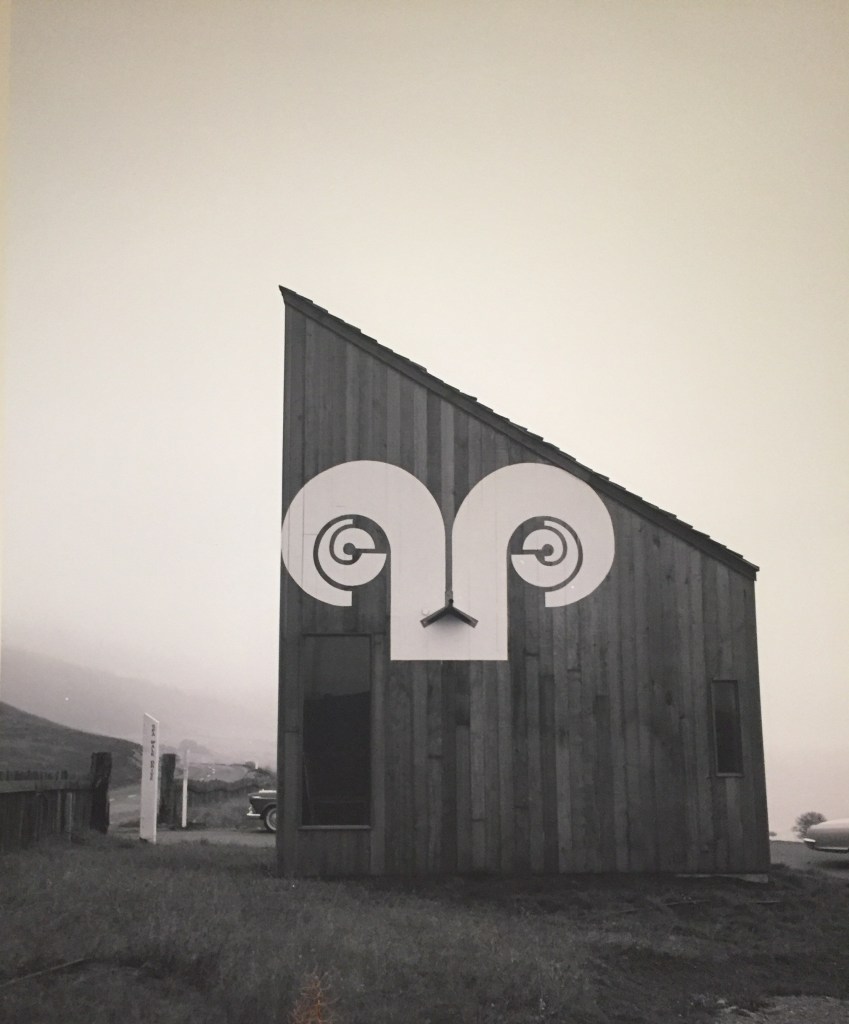
A couple hours pass. I take the Caddy back down, slowly passing the course, noting the orange Alfa is still there. I take a risk and pull into the lot, parking the Caddy right next to the Alfa, swap my suit jacket for a parka, kit myself out with a few essentials including my bird book, and then get out of the car. Walking back to the highway, I cross it and begin hiking through the unimproved hillside above the course, my bird book conspicuous for the first few yards. Scouting the hill, I spot a few rocks among the pines and grass and plop myself on one of the stones and set in to wait.
Around 1:30, and through my binoculars I see Iris approach the Alfa, open the trunk, and shove the bag of clubs back in. Along side her is an older woman, plain, almost stern even, and the two exchange pleasantries, then the old woman walks over to a large black car with a driver, gets in, and departs south. Iris, meanwhile, approaches the clubhouse and goes inside. I go back to waiting. Another hour passes, then Iris comes back out, gets into the Alfa, and starts the car. I hustle down the hill, pausing at the edge of the highway, then dash over it and to the cover of the brush between it and the parking lot. I hear the Alfa start up, and I make my way to the edge of the parking lot, keeping my body turned towards the course as if admiring it. I count to ten, then turn, and see that the Alfa is now facing out into the highway traffic, and Iris, being a good driver, is too intent on making certain the road is clear to pay any attention to me on the other side of the lot. I walk swiftly over to the Caddy and, using its bulk as cover, peel off the parka and get in. She pulls south into traffic, and I start the Caddy but deliberately count to ten once more before backing out of the spot and pulling after her. The journey is not a long one, and Iris is in no hurry as she dawdles down the two-lane for about twenty minutes, back into Sea Ranch, where she turns into the lodge parking lot. I pass. A bit beyond the lodge is a lot for a trailhead, and I put the Cadillac there, put my parka back on, and resume my birdwatching cover, again taking to the hills on the east side of the highway where the lodge is fully visible. Time passes, and it is a while before I see Iris, though I know she is there because of the orange sports car. After much patience, I am rewarded, spotting her walking through the lobby, then out to the lot. I panic: Is she leaving again? How much time would it take for me to get down off my rocks again and into the Caddy? And why had she even been to the lodge, anyway? I had no idea, and I began to feel the day was a wasted one. I notice that she doesn’t go for the driver’s door, however, instead going to the trunk of the Alfa, opening it, and then withdrawing a small weekend bag. She closes the trunk again, goes back into the lobby, makes a comment to the concierge there, and then walks out of sight down a hallway.
More grueling waiting, and I don’t trust myself with the distraction of a book, and I run out of nursery school rhymes and song lyrics to silently recite in my head. I check my watch: It’s well past four. Cars begin to pull into the lot, and glancing through the binoculars I can see that the bar and restaurant has opened and is beginning to glow, ever so faintly. I catch a glimpse of purple, and focusing my glasses I see Iris in a long, flowing dress in the color that emperors and popes once envied, walking through the lobby towards the restaurant. I can’t get a good glimpse inside, so I shift my position hurriedly, crossing the highway and setting back up along one of the public trails down to the cliffs just north of the lodge.
It’s getting cold, and I am growing a bit nervous about being spotted. It was one thing to be a bird watcher, a nature watcher, a tourist; it was entirely something else to be an immobile stalker of nature, never moving and never looking anywhere but one way. Thankfully it is growing dark. I now stick out less, out on the grassy outcroppings to the north of lodge. There is no longer much chance that I will run into joggers and idle hikers or other, more legitimate outdoor enthusiasts on the little foot-worn trail. With the darkness, though, the cold arrives. The few sparks of sun, far out distant in the Pacific, do nothing for the temperature, and they are themselves fast disappearing, just as the lodge behind and above me begins to bloom into a low, rambling Japanese lantern on the rocks.
I raise the binoculars to my eyes. Inside the restaurant, I see Iris’s head, and the head of the old woman, the same from the golf course earlier, but little else. I need a better angle, and after a bit of visual scouting in the paltry available light, I spot suitable higher ground, a bit more distant to the north but with a better angle. I move, and I hope that my growing nearness will not mean I will be more likely to encounter other people. I wish now that I had brought along Laura. A single man alone along the rugged coast, after dark, that was suspicious. A couple? Nobody would think twice.
Setting back up, I glance through the binoculars and find my situation considerably improved. The pair are sitting along the long back wall, near the north window, and now I can see the side of the older woman’s face, and a good three-quarter view of Iris, and while the table top itself remains out of view, I can see their arms, and sometimes their hands as they talk. The conversation is, however, almost unreadable. There is no great passion, no sense of emotional tells that might provide context. Is this woman her mother? A favorite professor from her days at Mills? Her sixth cousin, twice removed, if that was even such a thing?
As I speculate, and worry if frostbite is possible in California, someone approaches their table from the length of the restaurant, a man in a dark blue suit with fine, salt-and-pepper hair, carrying a plump burgundy valise. Iris rises to greet him, but the older woman merely smiles thinly, nods, and holds out her right hand. Mr. Valise shakes it easily, then sits down beside Iris, and I can tell that the tenor of their conversation picks up considerably. The waiter comes, offers a menu, but Mr. Valise turns it down, asks for something, sends the waiter away. A few minutes later, and the waiter is back bearing a large bucket glass of something amber and expensive. I wish, then and there, that I also had a nice bucket glass of something amber and expensive.
Thereafter a new pattern emerges. The old maid speaks at regular intervals, and Mr. Valise then responds, earnest and at length. Through most of this Iris sits quiet, though now and then she sticks in a word edgewise, mostly seemingly directed at Mr. Valise. After some time, Mr. Valise’s answers grow shorter, more confident yet also more calm, and the Old Maid speaks more, never animatedly, but at greater length and with greater warmth. The waiter comes back for more orders, everyone gets a second glass—something in a Martini glass for Iris, a red wine for the Old Maid, another bucket of amber for Mr. Valise. The conversation is more relaxed. Iris takes greater part. Mr. Valise leans down out of view, and when he comes back up he has something large and flat in his hand—an envelope, thick, weighty—and he sets this on the table between them all. A few more words, a few last drags off the drink, then he rises, shakes hands all around, and leaves.
Make. Something. Happen. The words are silent, they are inside my head only, but they are no less potent for that.
I scramble, dashing through the grass but trying not to make any noise. Not that I have to worry, as the sound of the ocean is oppressively loud. I get to the tree line of the parking lot just in time to see the dome light go off on a car there. It is big, some pea-green-gold monster, something by Chrysler. Its lights flick on, and Mr. Valise begins to back out of his spot.
I turn and jog across the football field’s length to the little trailhead parking lot, get in the rented Cadillac, and start her up. I manage to get her to the edge of the road just in time to see the big pea-green-gold Chrysler turn south onto Highway 1. I pull out after it, letting the tail lights recede a bit so as not to be too obvious. He doesn’t go far, maybe a half mile, before the lights turn off the road again, into a driveway to the right, on the ocean side of the road. I pass him by, slow, find a wide spot of highway, make a U-turn, and backtrack. I let myself pass the drive again, turning into the next one, which I discover to be a small residential road. The first driveway to the left is ungated, so I turn into it, dousing my headlights and markers. It leads down to a dark house under construction. I stop the car, shut her off, and get out. To the south, through the trees, I can see the glow of another house, the house that Mr. Valise must have gone down to. Between me and it is a low gully, manzanita and grass and pines, just enough to block a good view, and just enough to make me doubt walking through it in the dark. I grab the binoculars and head back up to the side road by foot, then turn onto the shoulder of the highway. A couple trucks pass the other way, but there isn’t much traffic besides them. I reach the driveway and turn right down it. It curves considerably back to the north and, I can see ahead, back to the south and the house; instead of following it, I cut across the relatively open ground towards some trees on the slope above the house, on the little rise the drive is circumnavigating. It is easy enough to sit here, well protected from view, but looking down onto the driveway and the little gravel field that served as a parking lot. A very busy parking lot, tonight. There are four cars there already: Two are big, dark colored sedans. One is a red Jaguar sportscar that is glossy even in the darkness. The fourth is the color of Midas’s vomit, a pea-green-gold Chrysler.
From behind me a noise, tires on pavement and a motor growing nearer, not on the highway but on the drive. A flash of metal swings down the drive and comes to a stop beside the Chrysler. It looks European, German, a BMW I am pretty sure. The dome light pops on, and out of it emerges a man with thick spectacles and a starched white shirt and a plain black tie, a man who looks more like an engineer from the Johnson Space Center or IBM than someone headed for a weekend at a tony California coastal resort town. As if he hears my thoughts somehow, he pops open the rear door of the BMW and takes out a bright mustard sport coat and puts it on. Pulling a comb from a pocket, he touches up his hair using the side view mirror, then heads towards the house, tossing his keys up and down in his right hand as he walks. At the house, he rings the bell. The big wooden door swings inward. A woman stands, one hand on the knob, one on her thigh, smiling. Words are exchanged, but the Pacific washes away their sounds. Mr. BMW passes her, and she gives him a European kiss on each cheek, then takes his keys in her left hand. She turns, almost a pirouette on her left foot, swinging the door gently and slowly with her right hand until it glides resolutely shut. Thankfully, the door’s solidity is more a symbolic statement than a measure of attitude, and the sidelights around it are massive, clear plate glass. The two are mostly hidden by the door, but I can see her left hand outstretched, receding down the foyer, and as it passes a small credenza, I can clearly see her drop the key set into a small Indian basket of woven grass.
Mr. Valise has gone to a key party. How long will he be in there? I check my watch—it is 9:35, early for a party, especially for a party where you got liquored up enough to go to bed with a friend’s wife. And I begin to wonder—do you take your work briefcase in with you, to a key party? Hello, darling! Kiss-kiss. Here’s my bag, would you be a darling and put it with the coats, upstairs on the bed? Or do you do as Mr. BMW has done, and transform yourself into Mr. Party in the parking lot, toss off your suit jacket and your bag along with your ambitions, run a comb through your hair, and walk in? I point the binoculars at the putrid Chrysler—is there a jacket hanging above the back seat, from one of the handles above the rear doors? It is hard to tell. And is it late enough that everyone who was arriving has now made it? Or will the parking lot get busy again with new arrivals as the night wears on?
I watch and wait. It is a Friday; nobody has to be up early the next morning, but also part of the point of a key party is what happens afterwards. My watch now shows ten. They are probably only into their second drink, perhaps the third for the earlier arrivals, and surely nobody else will arrive now. I get up off the ground, dust myself off, and hike back to the Caddy. There, from under the back seat, I pull out a long, thin, slim piece of black metal, along with a roll of duct tape and a crowbar.
The trip back to the house takes a bit longer, with the crowbar slid down the side of my pants and the thin metal strip up my left sleeve. It is awkward, but if a car passes—especially a sheriff’s car or a state cop—the last thing I want to be seen carrying is a crowbar. At the drive, I walk calmly, slowly to the parking lot, keeping to shadows at the edge of the road as much as possible. I pass around the nose of the BMW, then the big putrid Chrysler. Even in the night, it reminds me of canned split-pea and ham soup. Beyond it, the bulk of one of the big dark sedans protects me from the lights of the house.
I go to the driver’s-side door and slip the thin metal strap slowly down into the gap between the window and the door. Sliding the strip around a bit, I feel it catch, pull gently, and am rewarded by the clunk of the door lock releasing. I slide the strip back out and pop the door handle, and open the door just an inch or two.
Getting the duct tape out of my coat pocket, I pull off a hunk with my right hand, then slide my left into the jam of the door, where it hinges against the car, trying to feel for the dome light button without opening the door enough to set it off. It is damn near impossible, but then I think I spot it. I pull my hand back out, walk around, and then open the door wide with my left hand while quickly ducking down into the door, my right hand with the tape finding and taping over the button. In all, the dome light is on for no more than a second or two. Still, my heart is now playing an Art Blakey solo in my chest. I sit there, frozen, listening in the dark, crouching in the open door, waiting. No noises come to my ears, other than muffled music from inside the house. I turn my head slowly, but I see nobody. I got away with it, at least so far.
I sit in the driver’s seat. With access to the car, the crowbar is now useless, so I set it on the passenger seat, then look around inside. The valise is there, sitting on the floor behind the passenger side seat. I pull it slowly up and over the head rest, and then pop it into my lap. There are locks—it will take a little time to get it open, and it feels like it has a fair amount of paper in it. I look at my watch: 10:30, no time. Pulling a cloth from my coat pockets, I wipe down all the surfaces I have touched, including the door jams. I pull the valise out of the car, along with the crowbar and the duct tape and the thin metal strip and set them on the ground. I shut the door gently, bumping it with my ass to get it closed without much sound, then wipe down the door handle and the rest of the door. I know the small strip of duct tape is still in the jam, still holding down the dome light actuator, but I am not willing to risk the attention of removing it. Then, picking up the crowbar, the thin metal strip, the duct tape roll, and the valise, I walk back up the drive, back along the highway, back down the side street, back down the other drive, and back to the Caddy. Nobody comes out shouting, nobody chases after me, no cop cars pass on the road and shine their lights on me and pop on their cherry gumballs.
I put all the tools back into their proper places in the Volvo, stick the valise behind my seat, and then turn the motor over. In less than two more minutes, I am on Highway 1, headed south back to the city and home.
More each Saturday!
Enjoy this installment of Five-Eighty? Watch for future installments every Saturday morning during Fall, 2024. The next intallment will post on Saturday, October 14th, 2024. Previous chapters can be viewed here.
A note about sharing. While this novel is released to the public free of charge, I reserve all rights to publication. You may send links to friends, post excerpts on social media, or share it in any reasonable way, but please do not repost whole chapters, nor print and distribute paper copies. Please also, whenever possible, share a link back to the content.
 Harbour Fordyce